What We Made Possible Together This Year
Year-End Reflections from Walk Around Philadelphia & my other community practices
There is so much bad news out there.
And things are so hard on so many fronts: polarization, alienation, loneliness – nevermind technological disruptions and economic struggles.
And yet, this year, I kept seeing something else.
So here’s the good news:
This year I saw people walking side by side who had never met before.
This year I saw neighbors discovering landscapes they never knew existed.
This year I saw hospitality, tenderness, generosity—quiet acts that add up.
In a time when so many forces are pulling us apart, we chose to gather at the margins and find ways to walk together instead.
This isn’t a list of accomplishments so much as a reminder: we are capable of building the city we want to live in. And the past year offered glimpse after glimpse of what that can look like when we do it together.
Below are some of the moments — big and small — that showed me what we’re capable of when we choose connection, curiosity, and care.
1. We reimagine how we connect to one another.
We build connection between people from different backgrounds.
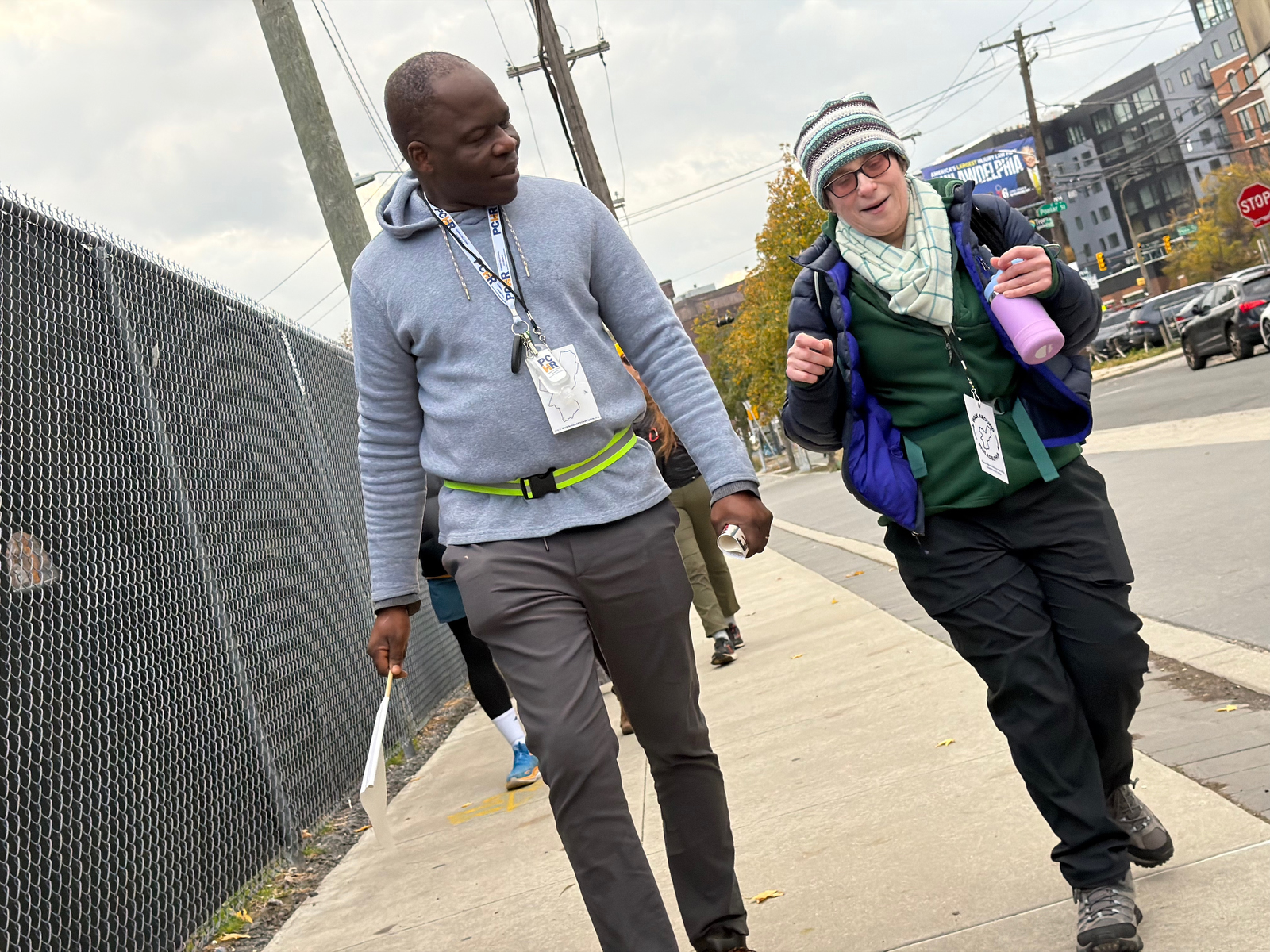
This is what Gilbert & Meredith experienced during our recent first pilot Walk Around Philadelphia experiences for Francophones.
They might otherwise never have met, and these kind of unlikely connections lead to new possibilities.
We build connections between folks who are brand new to Philly and folks who’ve been here their whole lives—even in the pouring rain.
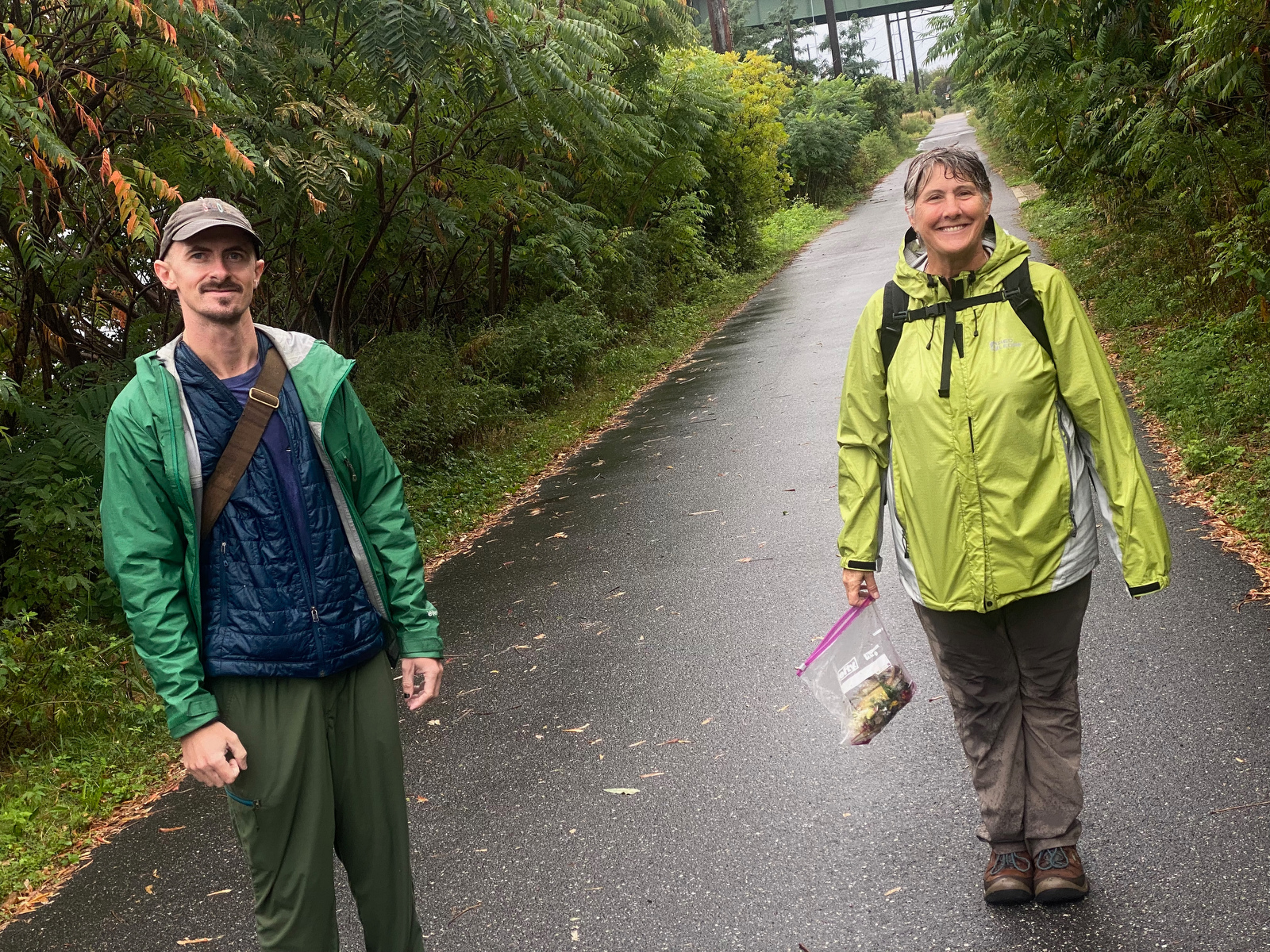
Ian joined the perimeter walk on his fourth day in in the city. Damini was a lifelong Philadelphian when she found her way to new corners of the city.
It’s hard to imagine them crossing paths — let alone sharing them — so quickly without the structure of the walk.
We see the city (and our neighbors) with new eyes.
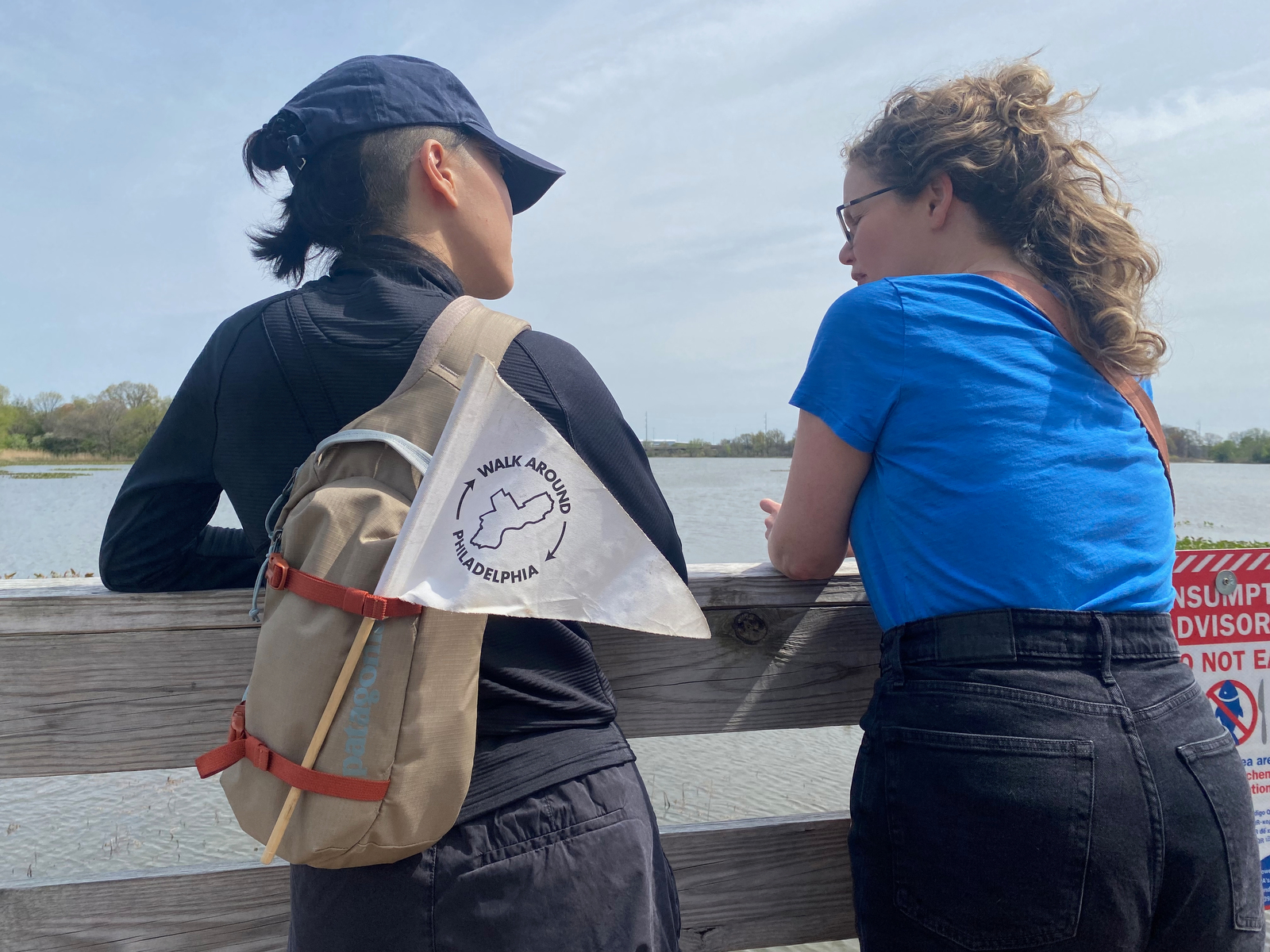
Yes, to some degree Walk Around Philadelphia is about introducing people to magical spaces like the John Heinz Wildlife Refuge… but it’s also a unique social space that opens possibilities for new connections.
We extend hospitality to each other.
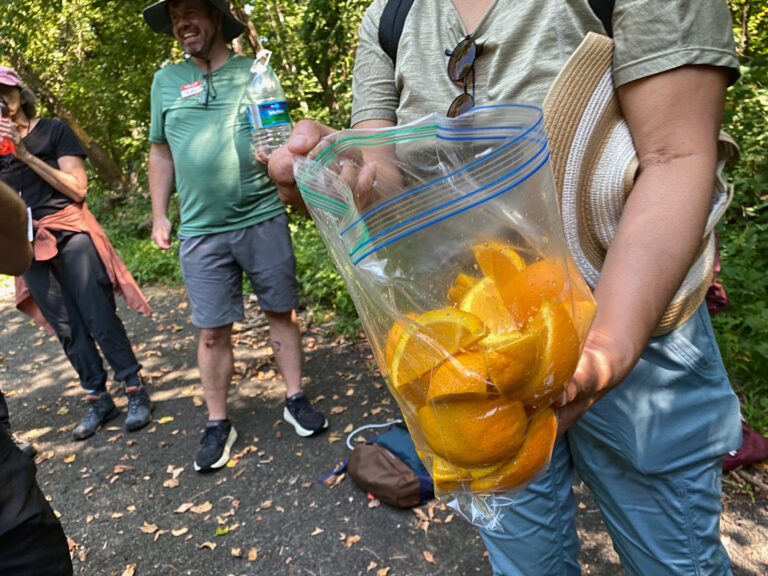
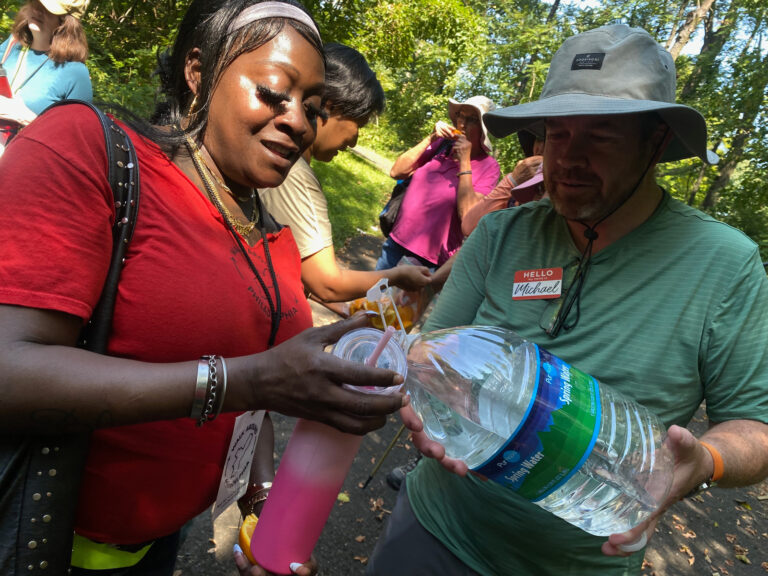
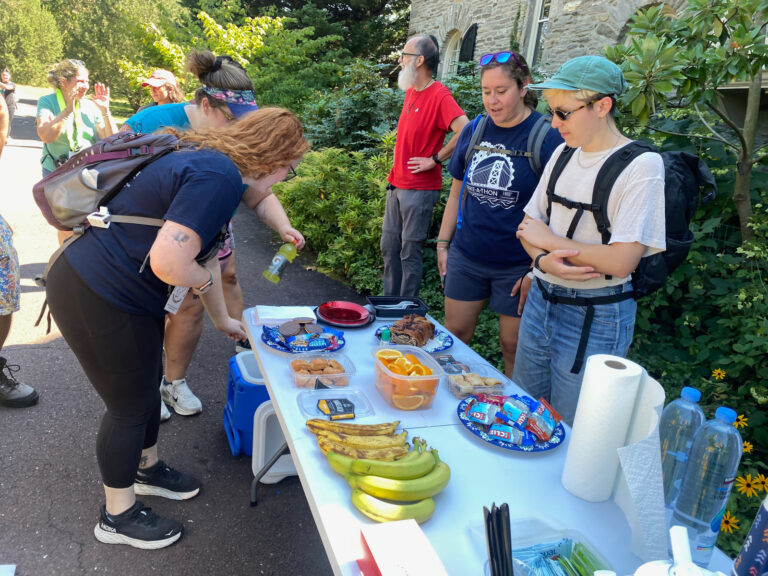
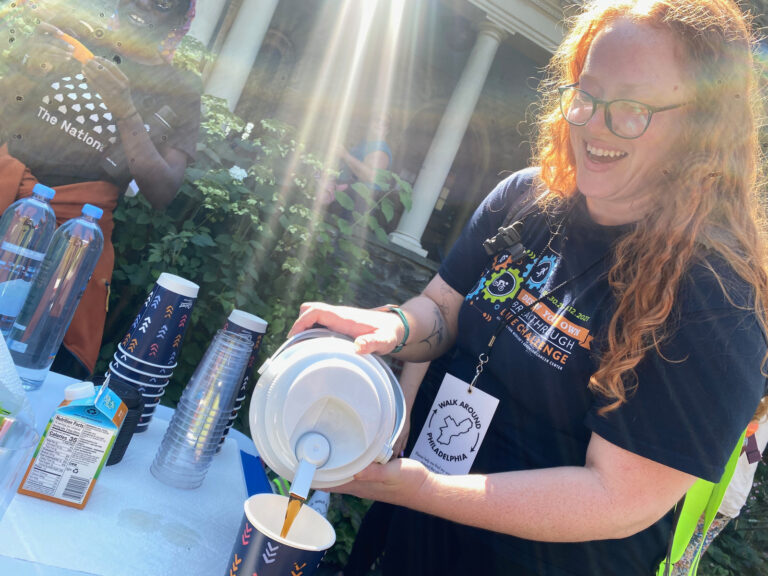
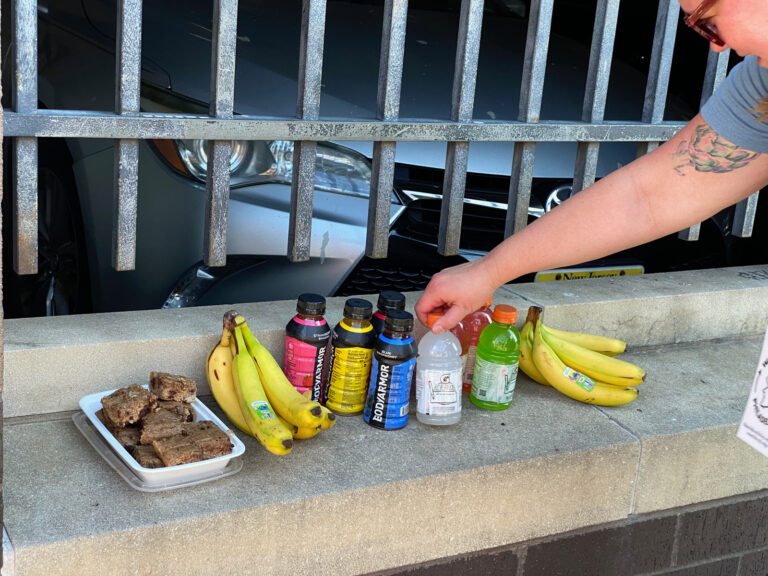
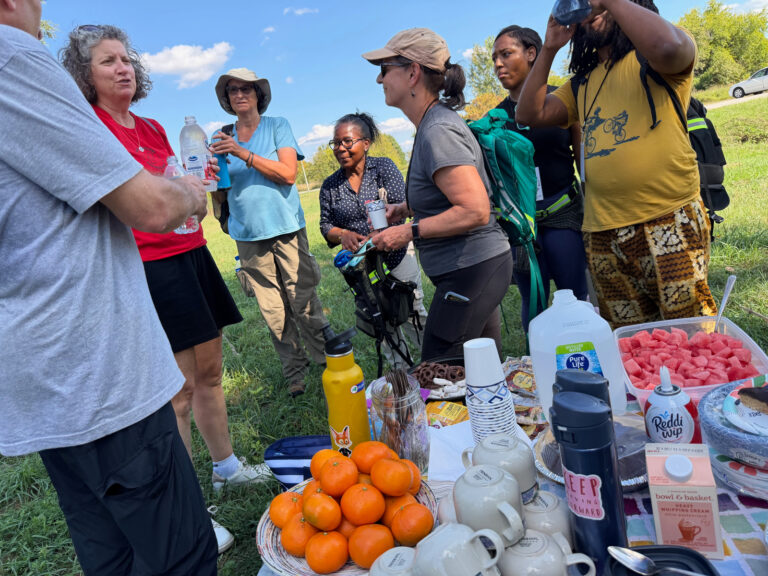
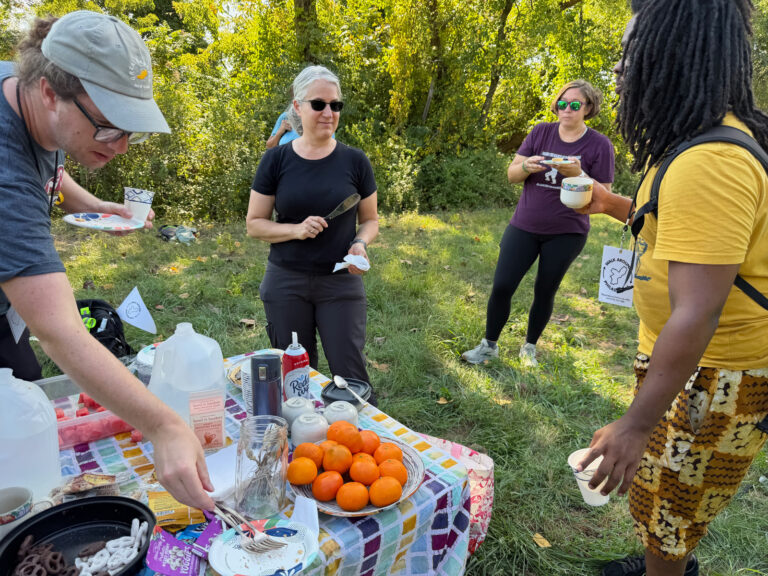
The only thing that’s sweeter than the sharing of snacks with fellow walkers while on the walk is when some of our walkers (or friends of the walk) show up in the middle of the nowhere (or welcome us to into the Morris Arboretum) with surprise Trail Angel snack stations!
We embrace obstacles, detours and delays as opportunities for collaboration and connection.
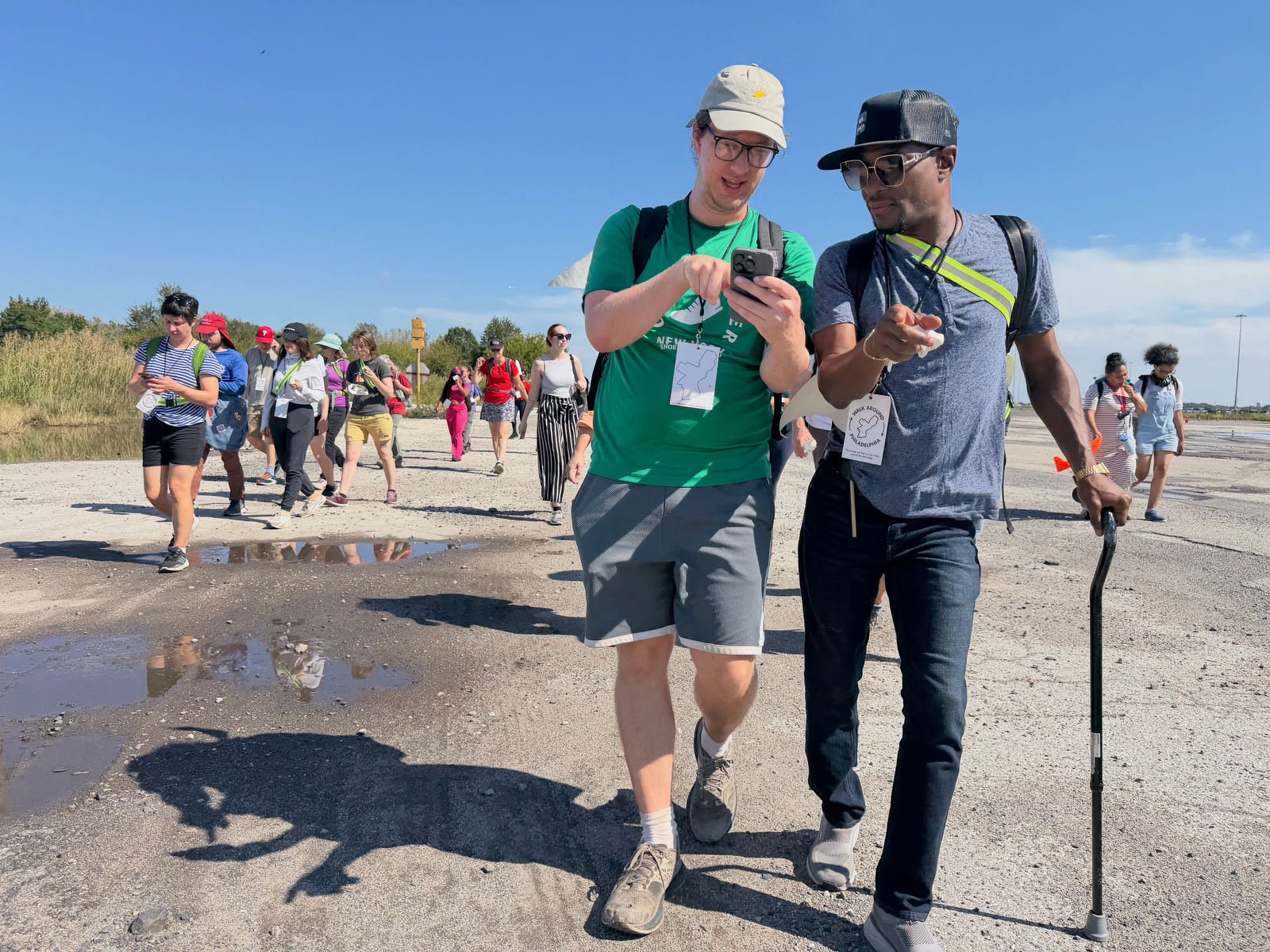
Navigating the southeastern corner of the Navy Yard is tricky… but the roundabout detours provided Mike & Darrell opportunities to practice collective wayfinding and collaborative decision-making.
2. We reimagine how we connect to this place.
We can build connection to our natural environment.
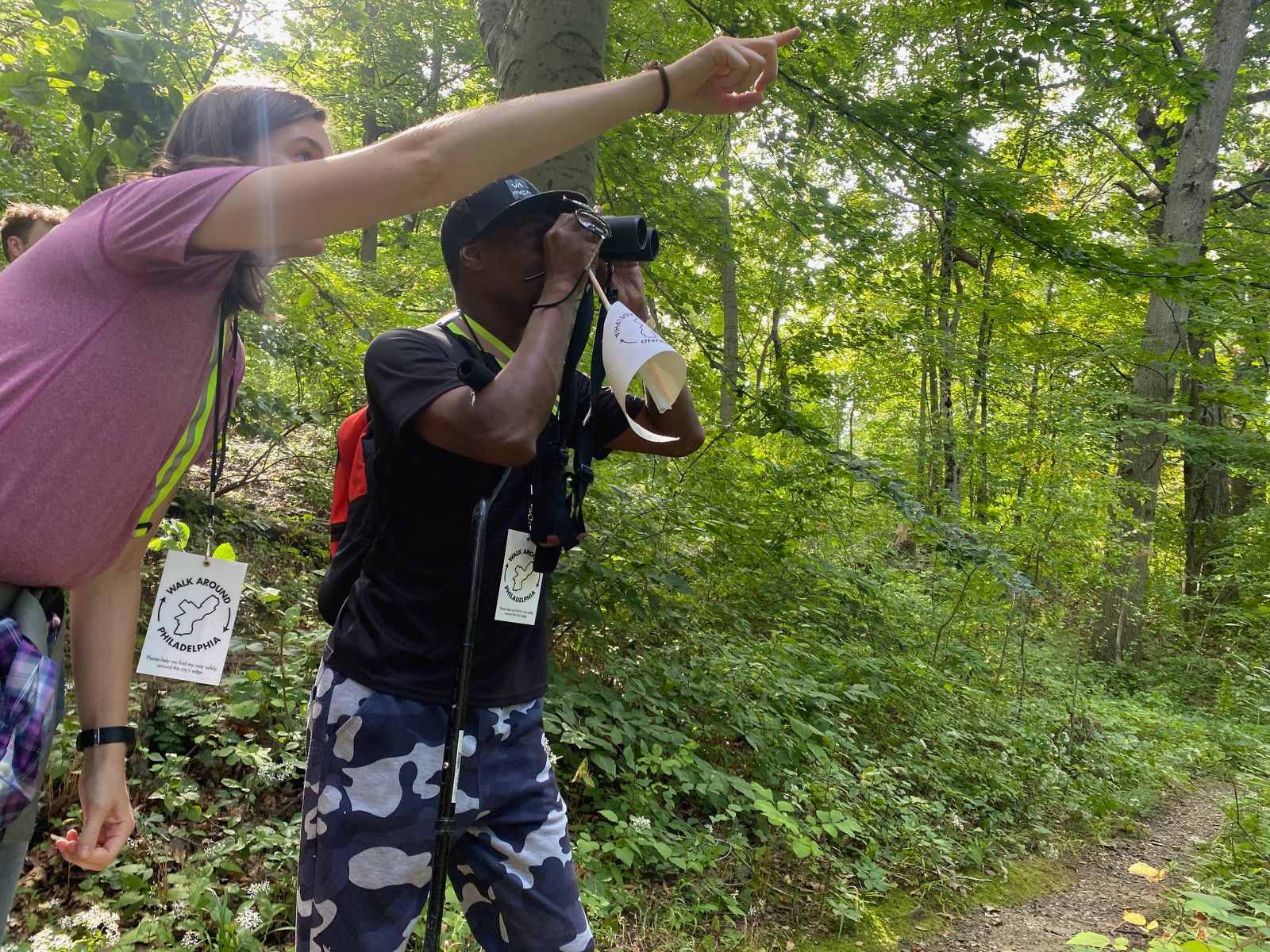
You might not be the kind of person who signs up for a bird walk, but if you’re setting out to explore the city’s edge with my neighbor Savannah (or any of our other walkers who are into birding), odds are you’re going to learn about birds.
So much of the city border is parks and waterways, so there are ample opportunities to spot hawks and herons, turtles and foxes, eagles and deer and so much more… so the walk naturally becomes a tool for ecological education…
We learn how the systems around us work.
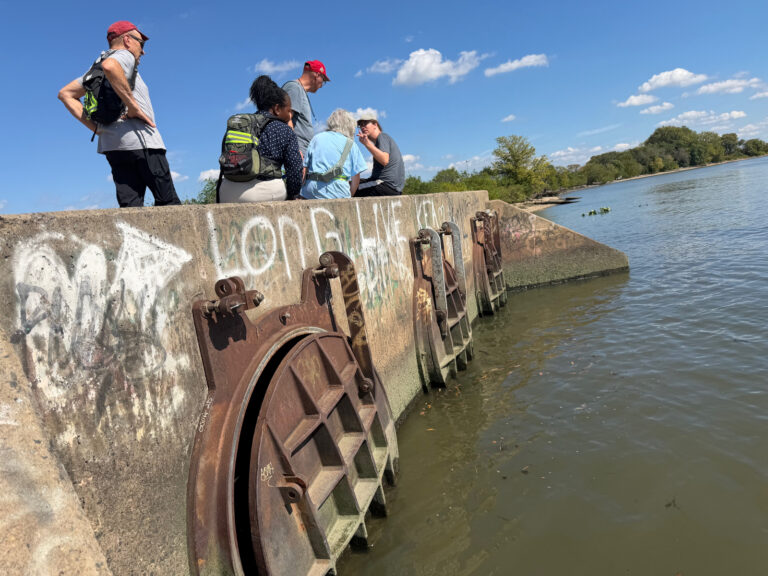
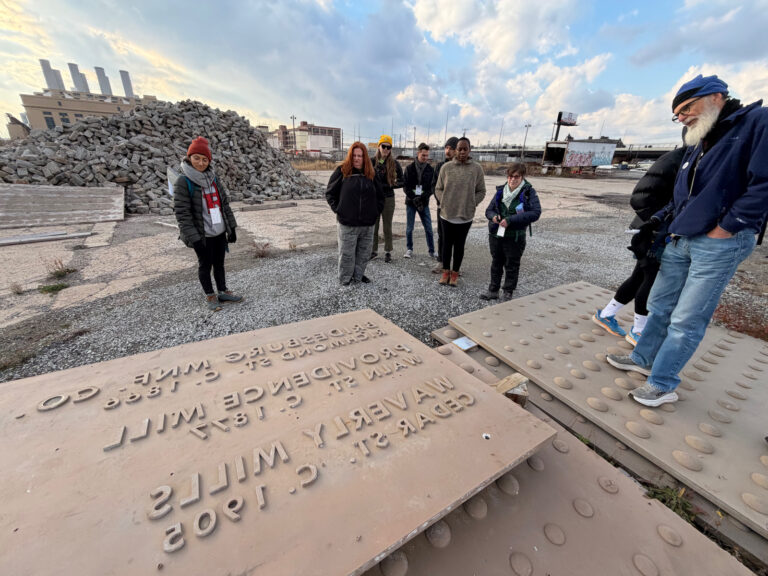
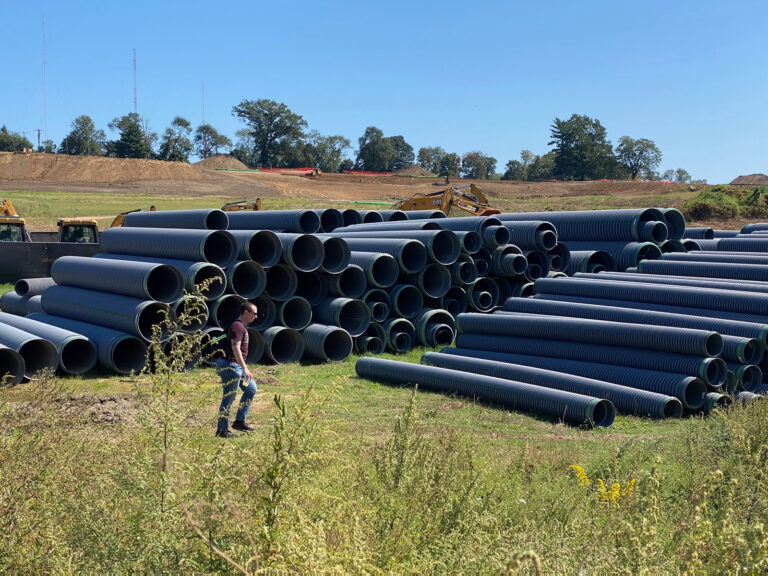
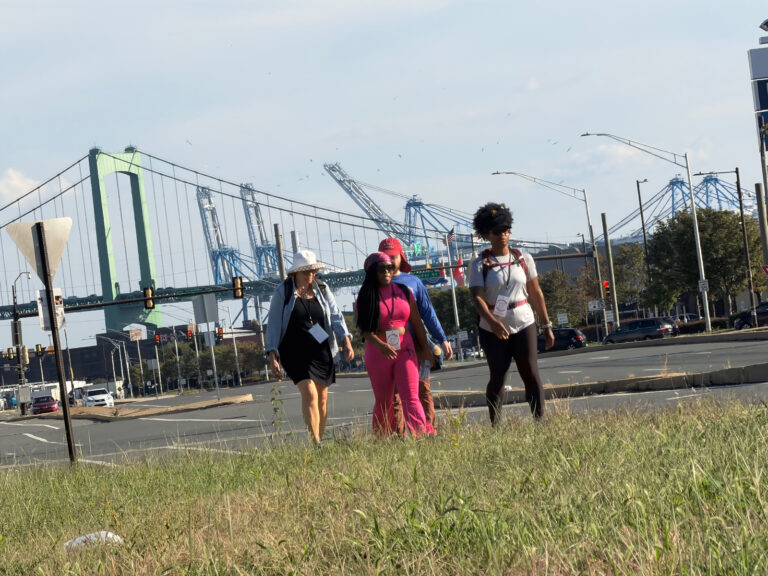
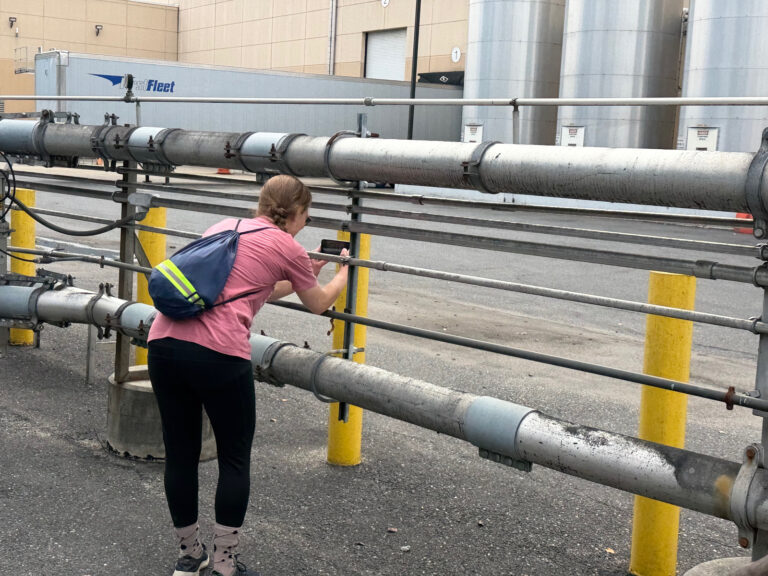
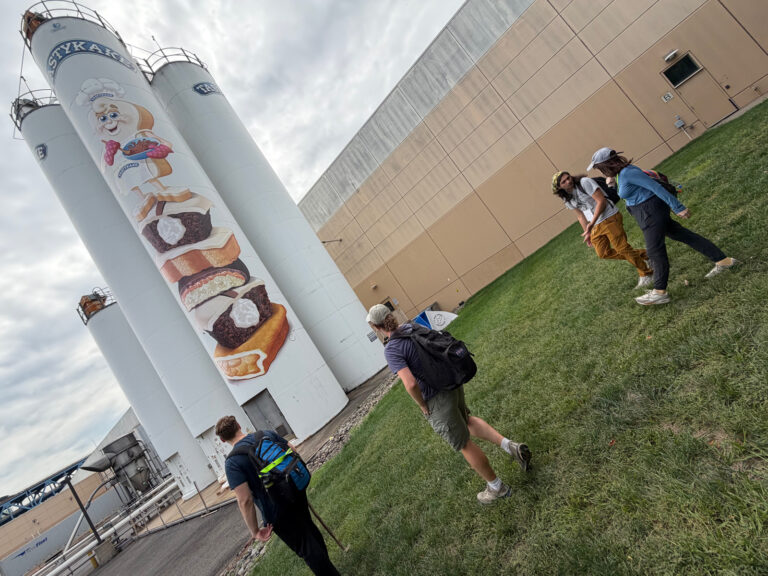
The walk also traverses many industrial zones, and we always catch glimpses of the raw materials of the city as it is being built, repaired, or slowly falling apart. We get up close to the airport and the shipyards and also scrapyards, water treatment plants, gas storage tanks, prison facilities and firefighter training grounds and many other ways to learn about the infrastructure that our urban environment relies on.
We find sustenance in the most unlikely of places.
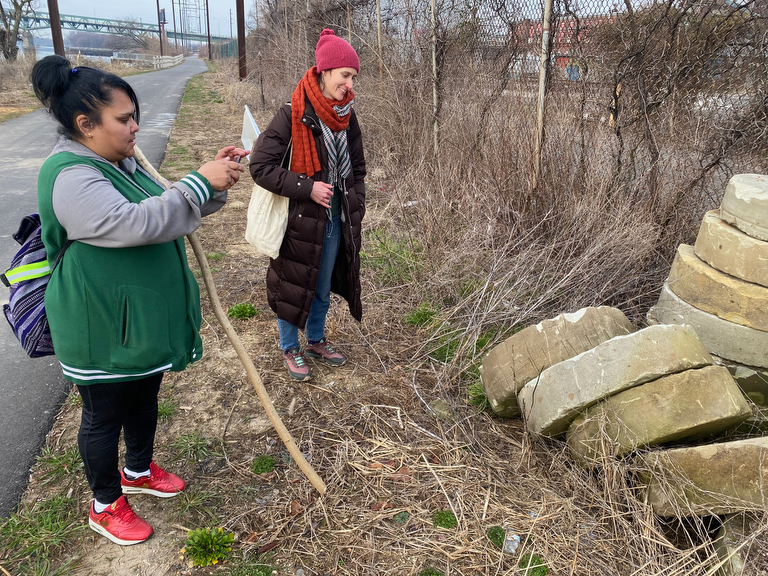
And yes, I did carry this GIANT puffball mushroom all the way home and turn it onto a soup that fed all of my neighbors.
If you’re curious about mushrooms, the Philly Mycology Club is a good resource, and they organize some great park cleanup events in Cobbs Creek Park on the western border of the city…
We create embodied learning experiences for young people.
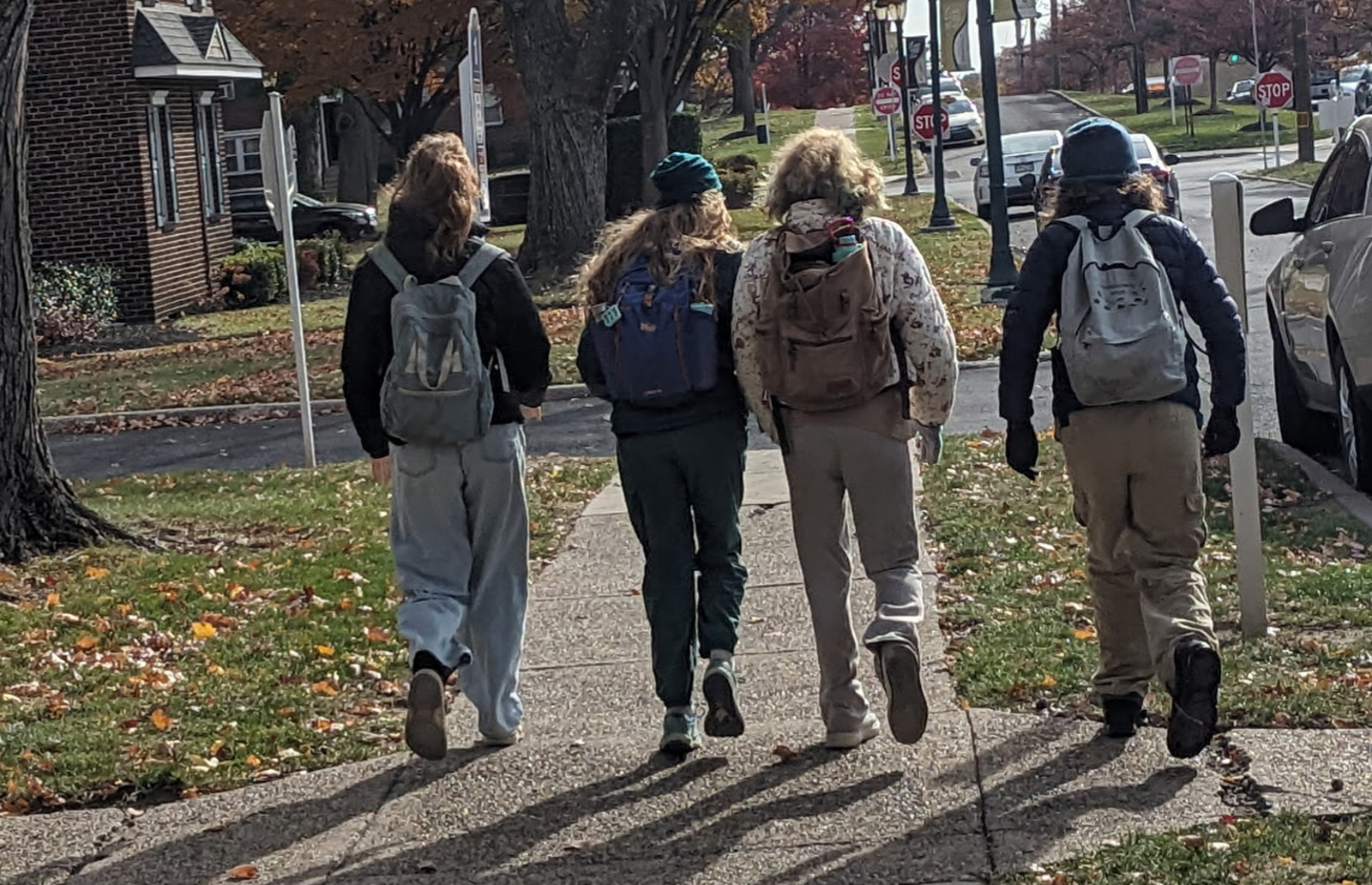
Right now, there’s a group of high school students who are doing the walk every other Friday as part of their experiential learning program.
It’s my hope that twenty years from now, every young person in the region will have the opportunity to experience the city’s edge the way that Shawn, Zahra & Elliot already have, or to do it as graduation ritual (like Dori did for her Lower Merion School District senior project!)
We create embodied learning experiences for our elders.
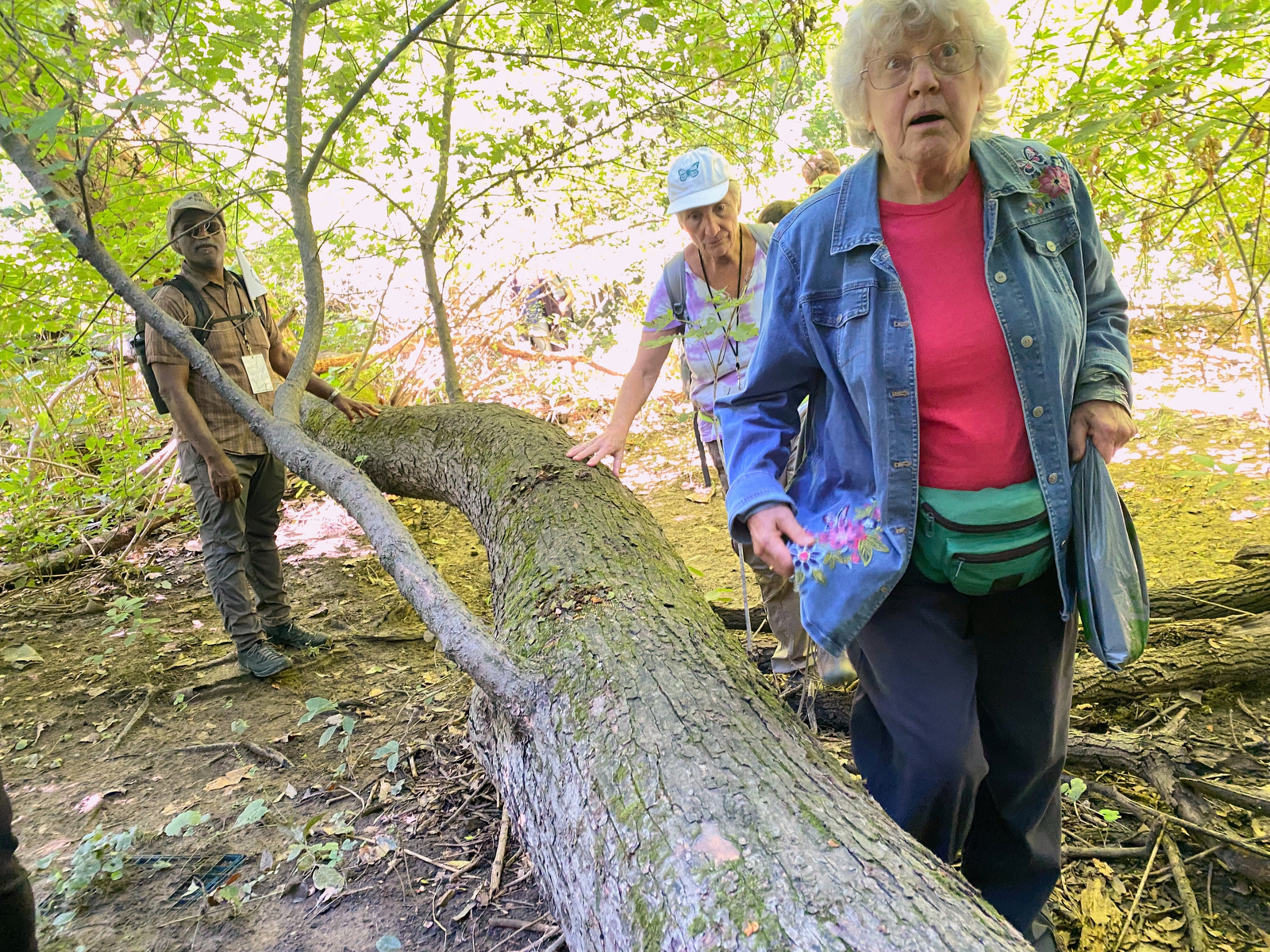
But you don’t have to be a high school student to enjoy adventures in the woods… Mildred had a great time bushwhacking with us along the Poquessing Creek… and our eldest participant circumnavigated the city at age 96 — a reminder that the city’s edge can hold all ages, all bodies, and all ways of moving through the world.
We use a border to connect us rather than divide us.
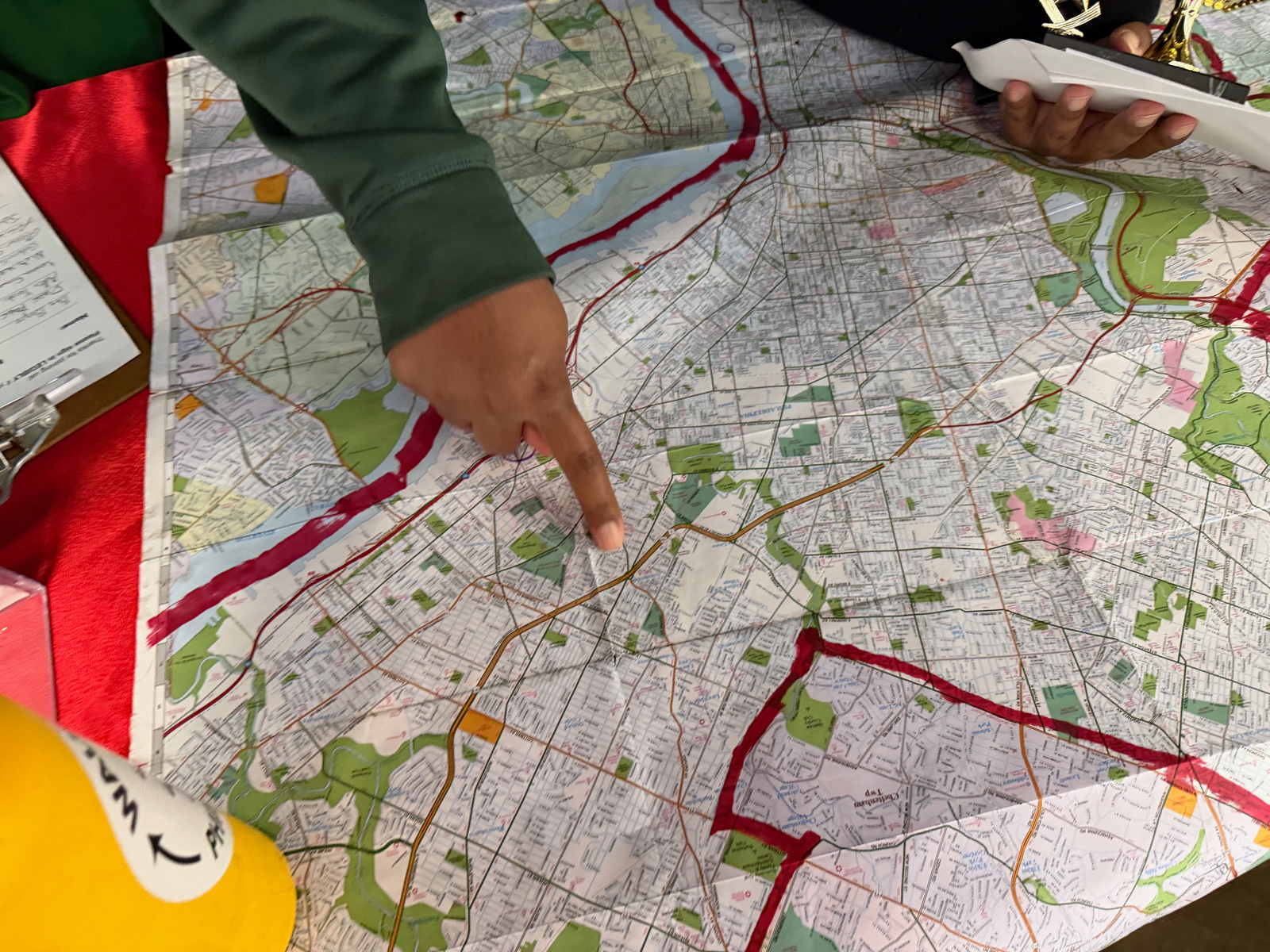
That stark border line is an arbitrary human creation. It has its uses, but it doesn’t necessarily need to divide us.
What if instead, setting out to explore this border was the thing that brought us together?
We create a shared rite of passage that connects the entire region.
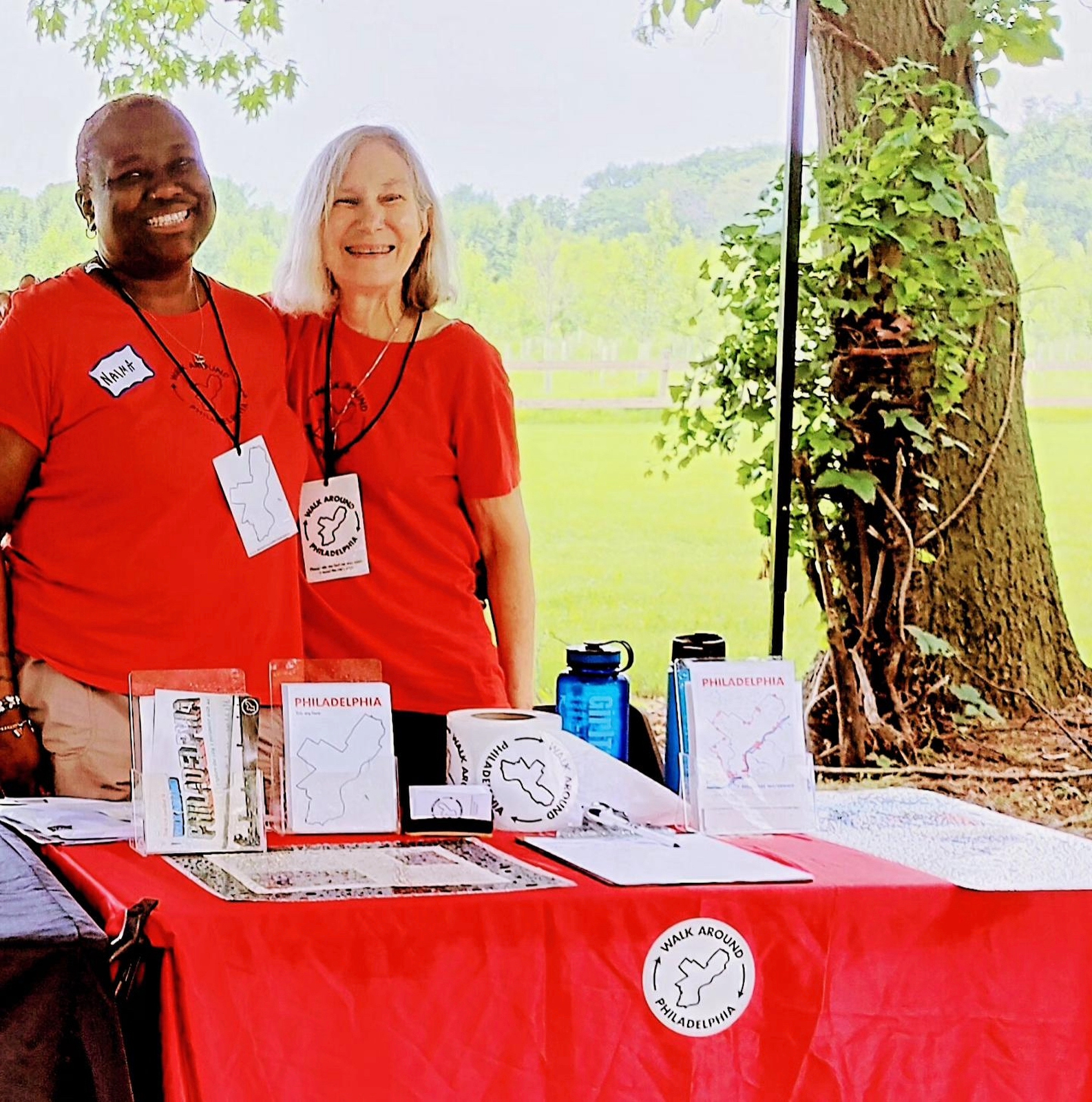
There are *so* many wildly different ways to experience this city… neighbors on the very same block might have drastically different lives. (And if you live on Fillmore street, your across the street neighbors might live in a completely different county & school district!)
Walk Around Philadelphia brings neighbors together into a shared experience of the city. Each walk is unique with its own strange surprises (for example, only the folks who joined our francophone walk on Nov 15 will have experienced this strange book-burning in the wilderness…)
Those unique experiences create immediate bonds of kinship amidst the groups, and when members of the growing community of perimeter walkers connect, they immediately discover that they have a shared frame of reference and connection through shared values that we cultivate in the walk.
And so the walk is not just an educational experience but also a civic one, which brings us to #3…
3. We make experiences accessible, welcoming, and wide-reaching.
As the Walk grows, we’re continuing to build the capacity, relationships, and structures that make participation possible across all of the lines that normally divide us.
Because the invitation to explore the city’s edges belongs to everyone.
We can find ways to make rich experiences accessible to people with different needs.
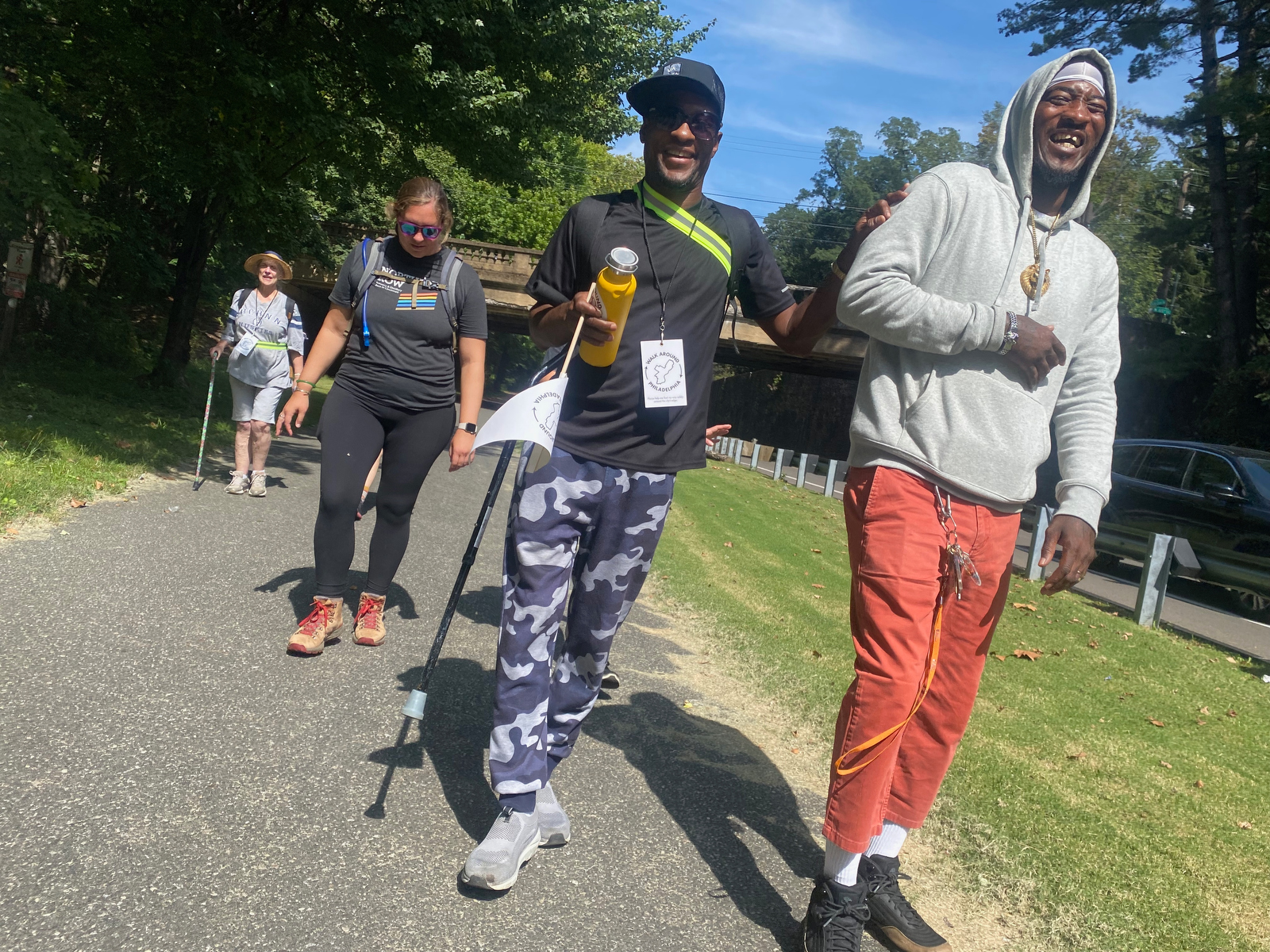
Some people will use canes or mobility devices to navigate the city’s edge, and some of the terrain certainly poses accessibility barriers. We’ve been working every year to develop more accessible programs and resources to accommodate varied needs.
Others might not have the financial means to undertake this kind of adventure – that’s what our stipends are for. In 2025, we distributed $11,400 in stipends to support participation by participants facing financial hardship.
Our goal is that, as long as 20% of Philadelphians live below the poverty line, 20% of each group be stipend-supported.
We inspire people to set out on their own unique adventures, AND find ways for them to come back & connect to a growing community of walkers.
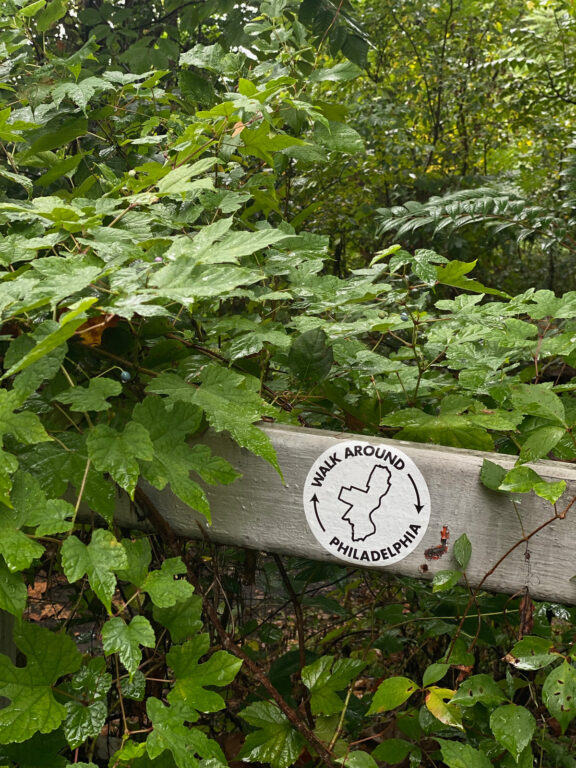
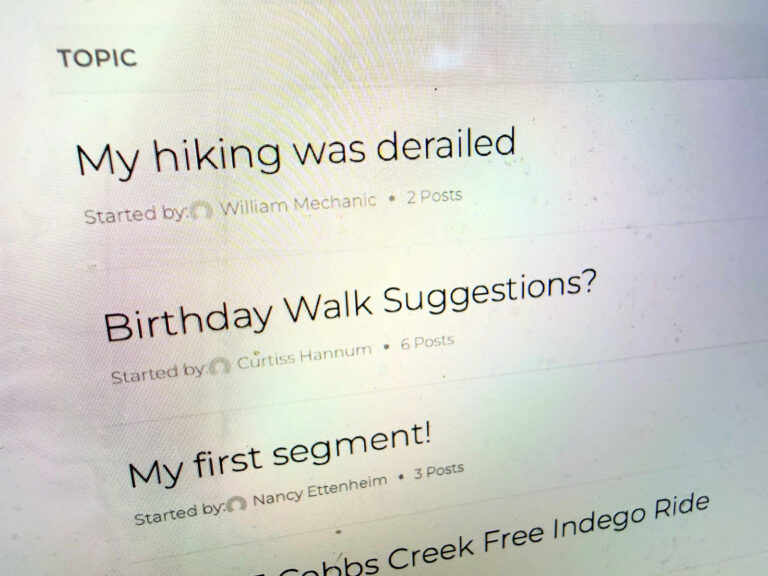
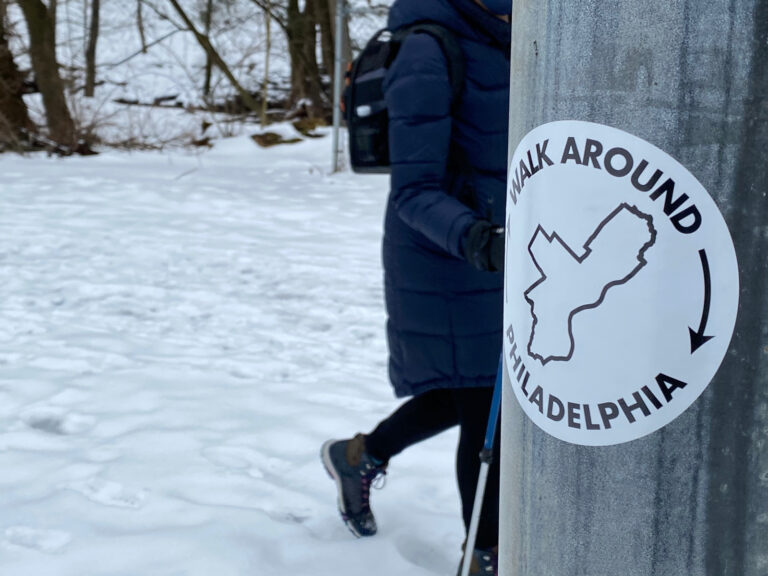
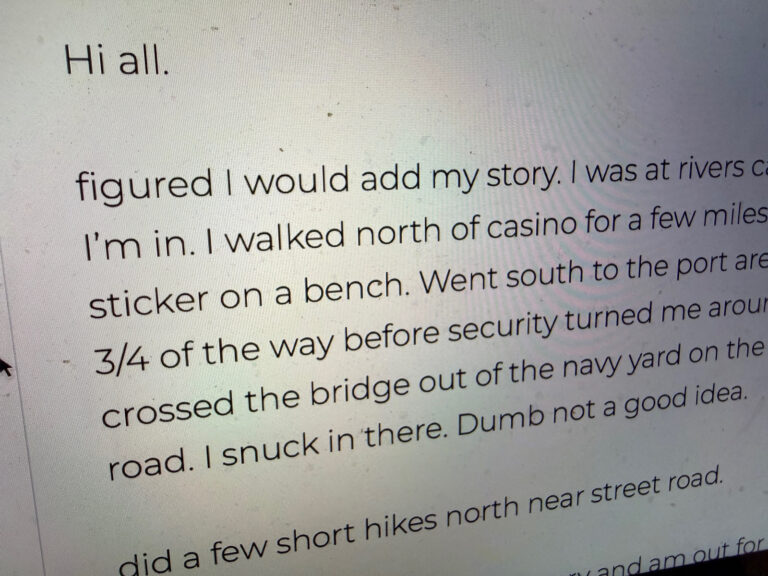
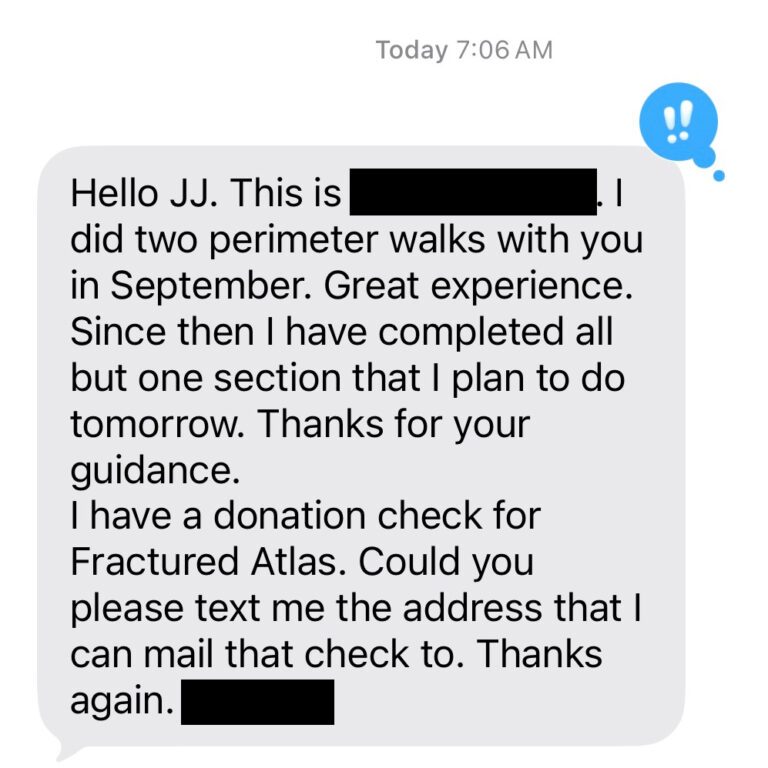
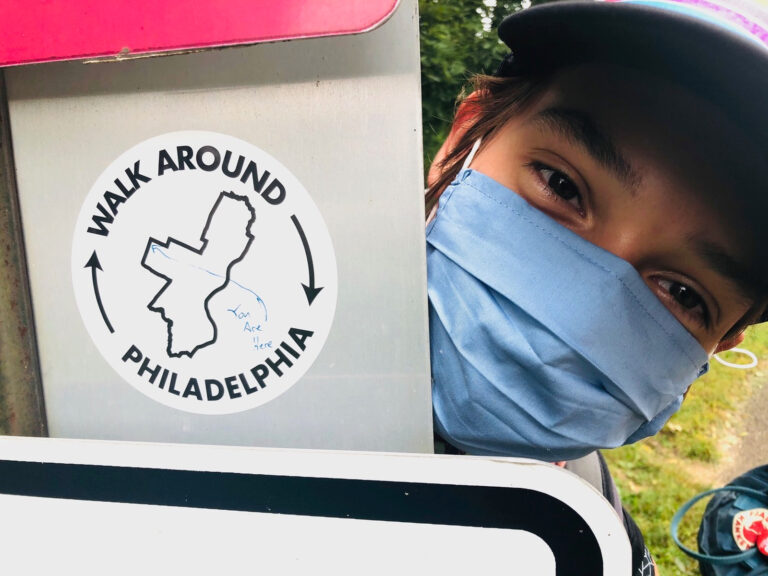
The walk doesn’t end when someone reaches a segment’s finish point — it lives on in the stories they tell, the curiosity it awakens, and the way they step back into community.
I’m thrilled to hear stories from the folks who are out there doing the DIY version of the walk – and excited to create more opportunities for folks to come plug back in to the larger walk community. Our discussion forums are pretty basic, but a great start.
- Nancy says “This is one of the coolest things I have done since moving to Philly about 4.5 years ago.”
- William walked out of a casino, spotted a sticker, and set off on what looks like at least five different days of hikes ’round the city’s edge!
I’m hoping that they and folks like them can make it to some of our next in-person events so as to compare notes, and see what it’s like with and for different people!
We facilitate these experiences in other languages.
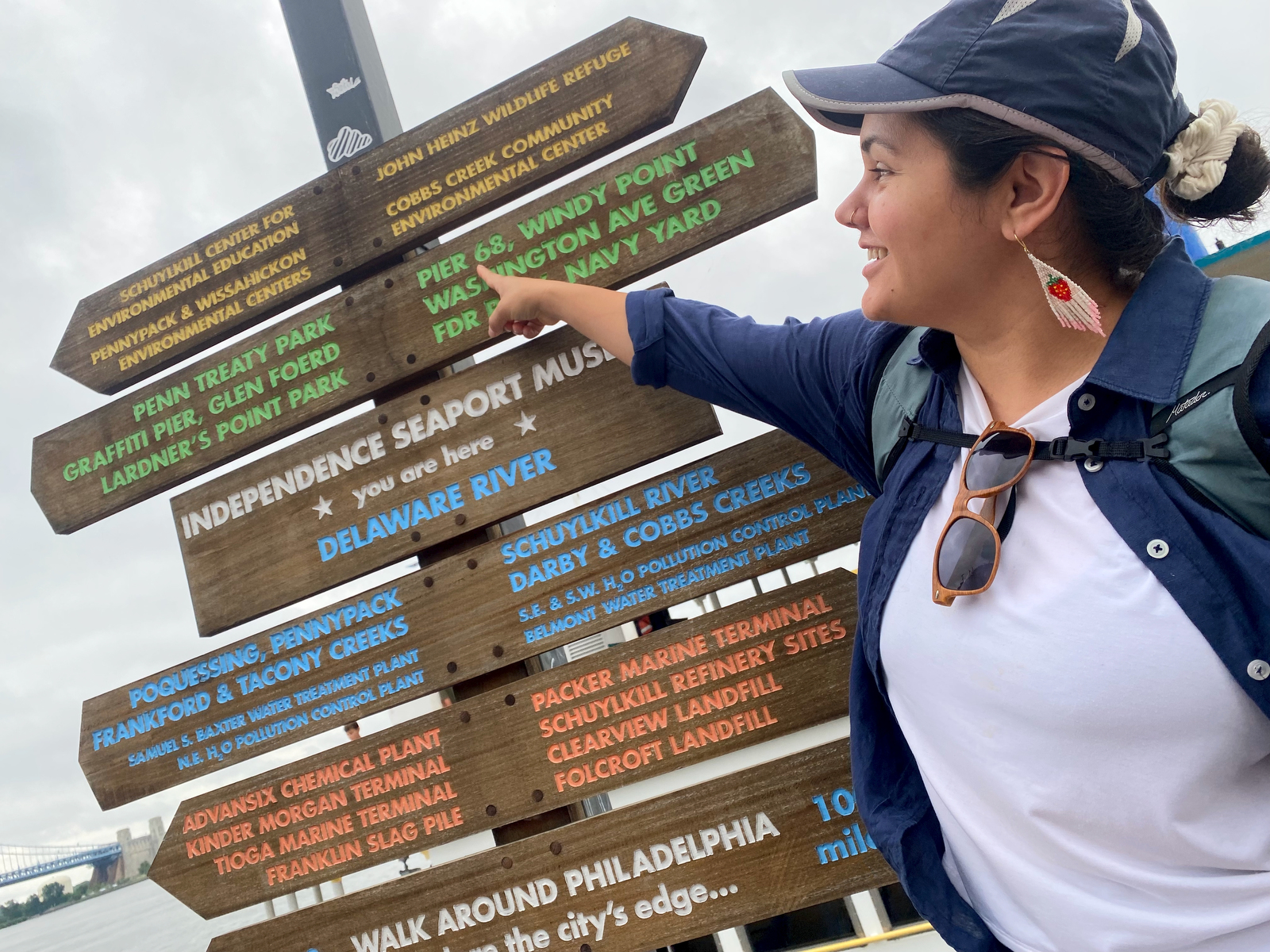
This year we piloted our first two Walk Around Philadelphia experiences in Spanish and two in French.
Offering these programs is helping us not only make walk experiences accessible to some our partners in their own languages, but also identify members of our larger community of walkers who can act as interpreters and accompanists for immigrants who might want to join our other walks to work on their english!
We meet people where they are.
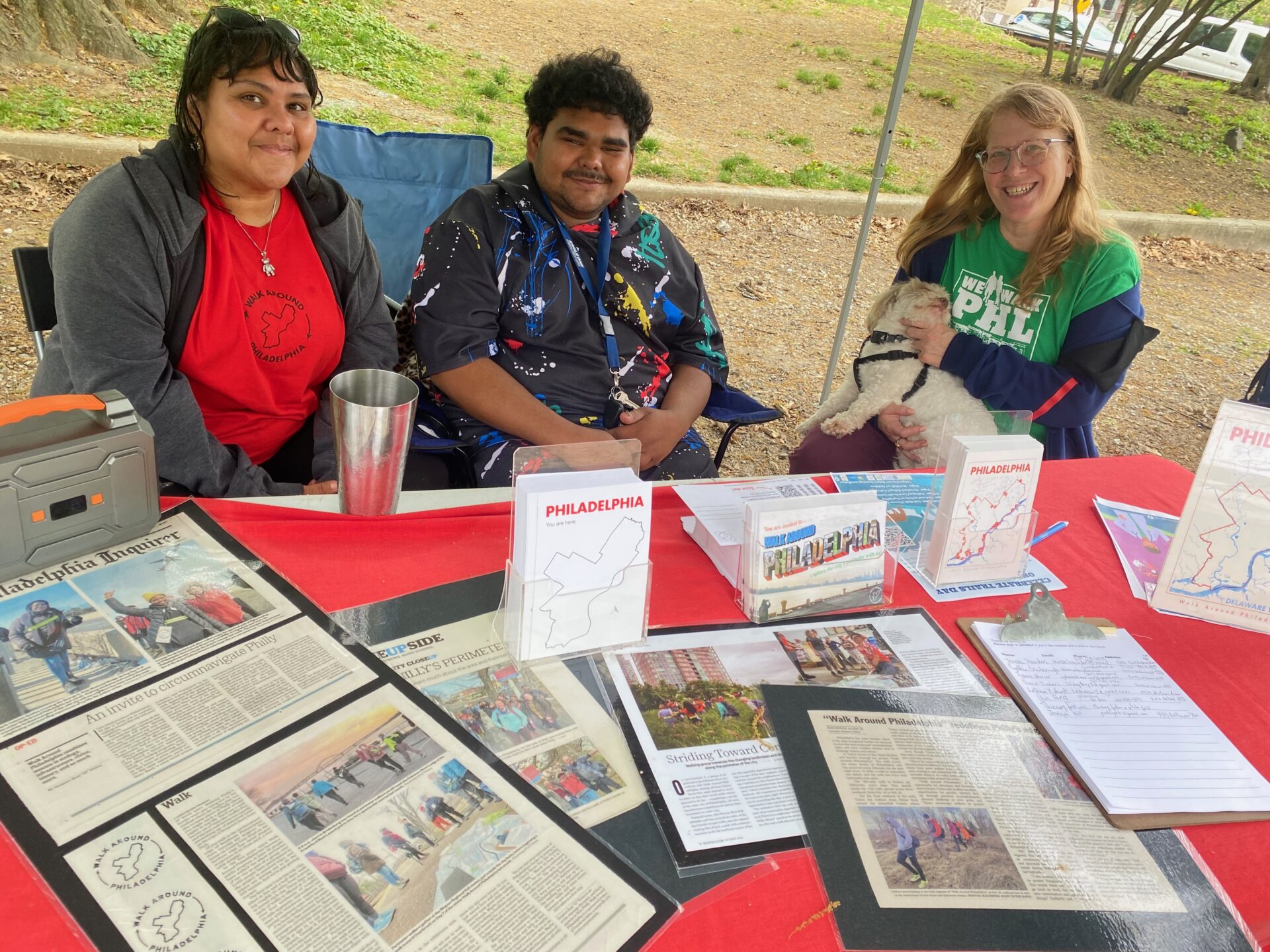
By bringing our outreach stations to community events across the city, we’ve begun making inroads into communities that are currently underrepresented in the walk’s participant pool.
Our goal is that eventually, the walk’s participant pool will be representative of the region’s demographics.
Meeting people where they are is how we make sure the walk is not just for those who already know about it — but for those who have never imagined themselves in spaces like these.
We are building a team.
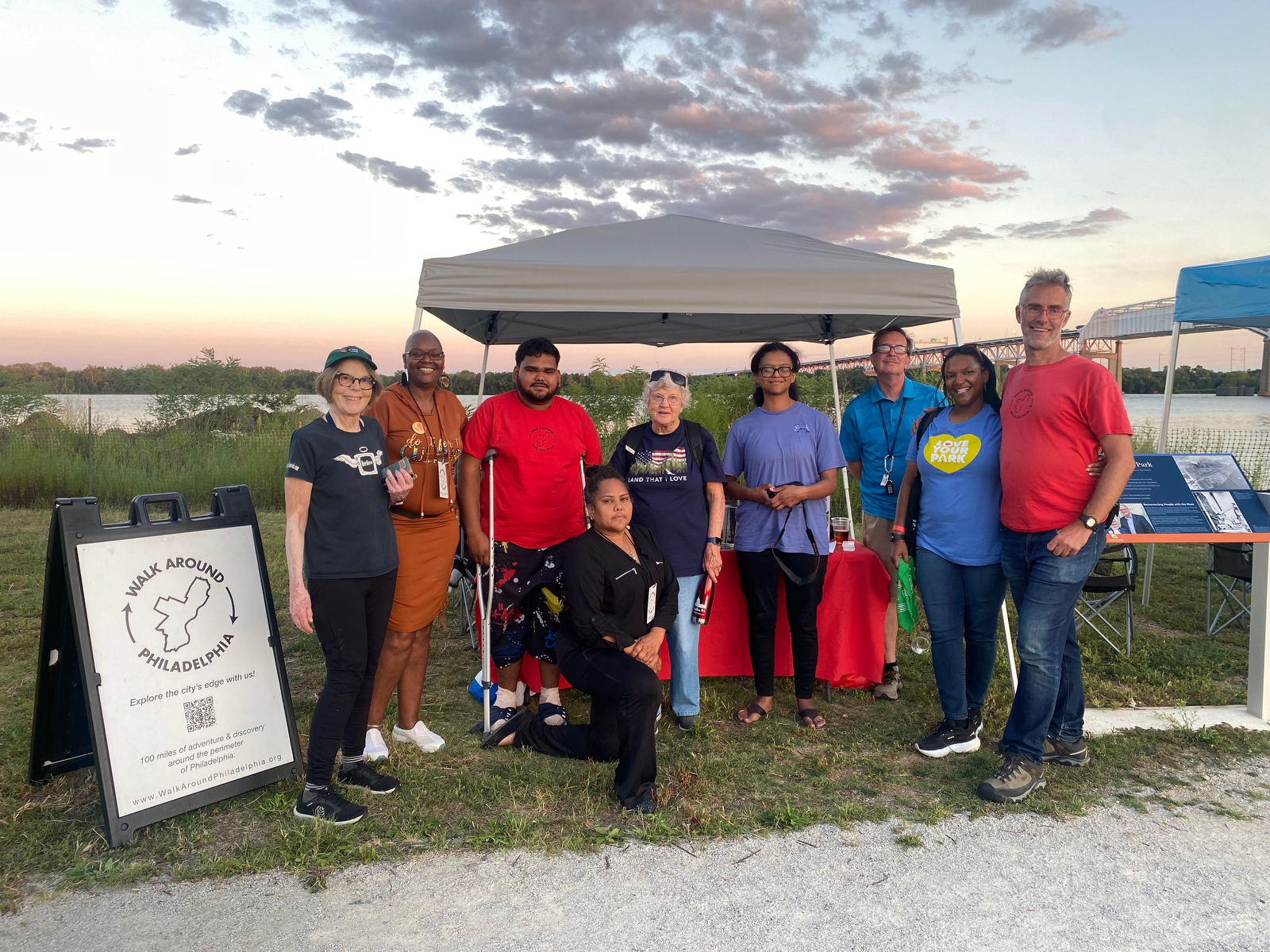
Another one of our accomplishments in 2025 has been engaging more volunteers to help support outreach efforts – It’s been amazing to see how many folks have expressed interest in volunteering to support the walk!
Right now we’re running into the very real limits of our current administrative capacity both in terms of managing more volunteers and accommodating more walkers (why do more outreach when your walks are all already waitlisted?) but as we clear those hurdles and build more capacity, we’re thrilled to have this growing community of support.
We get good advice.
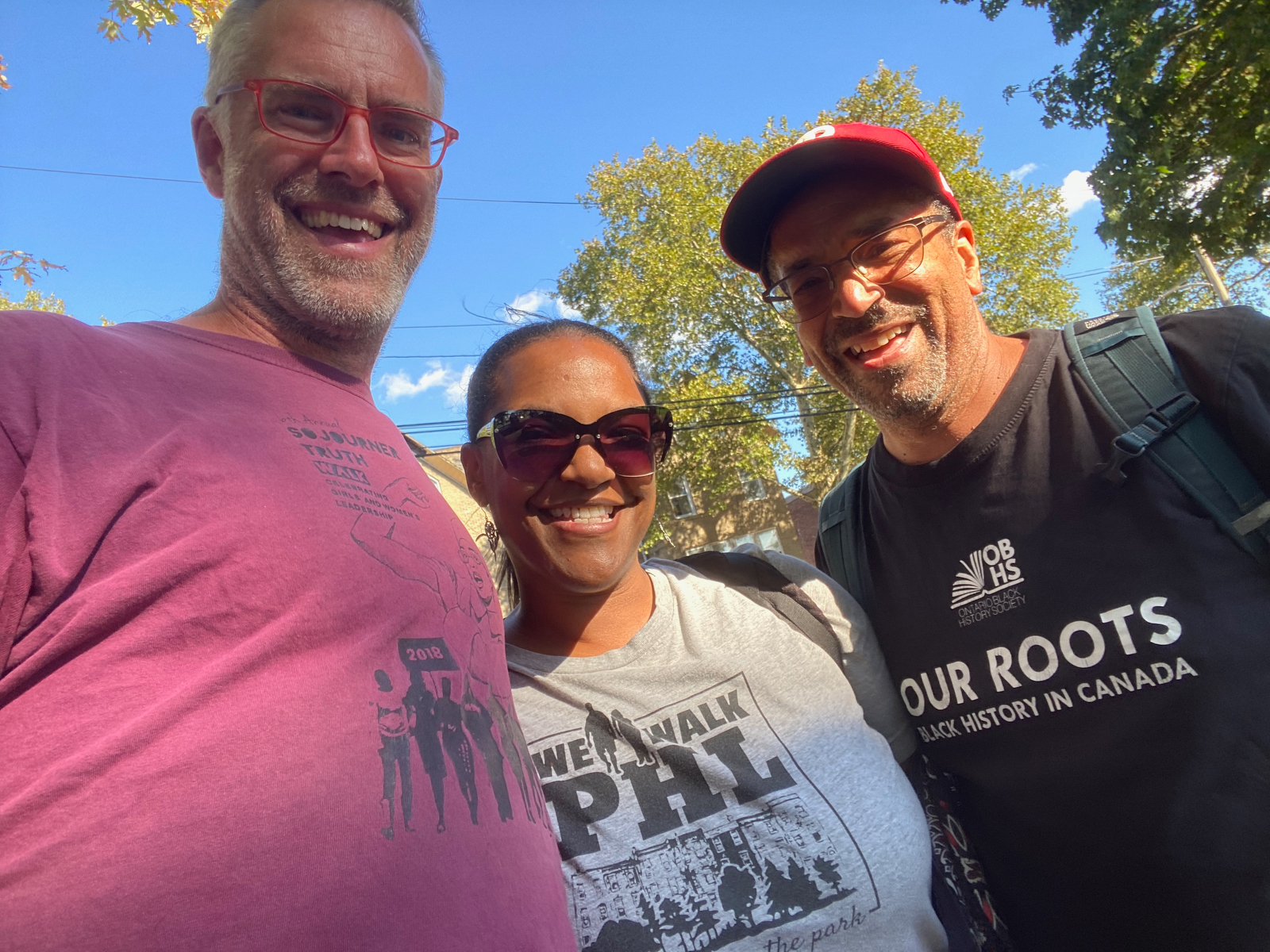
While the walk is still mostly just a lil artist-run project on the back-end, it’s benefited from a fantastic crew of advisors, both through its community advisory board, and through the many other awesome folks out there who’ve been sharing insights, connections and strategies for our next steps.
Among them: Nicole (center) who runs WeWalkPHL for the Fairmount Park Conservancy, Ken (right) who’s Walk to Freedom project retraces Underground Railroad routes, and Stephanie (not pictured) who runs Riverfront North Partnership (and recently brought to fruition the gorgeous new Borski Park in Bridesburg – also on the city’s edge!)
We work with our partners.
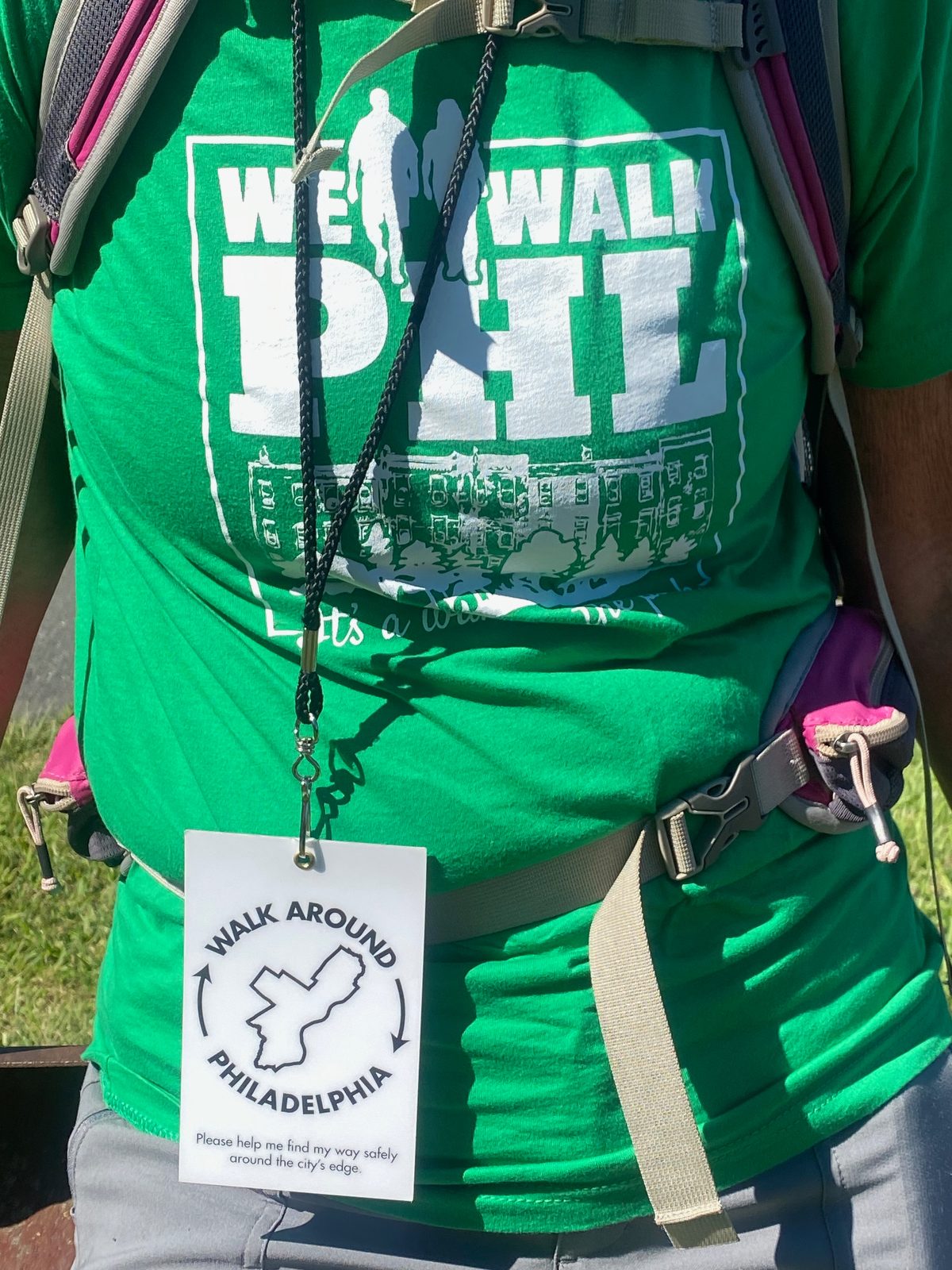
Our partnership with WeWalkPHL has been a natural fit: they provide opportunities across the city for our walkers to continue walking in community in between perimeter programs, and we provide opportunities for their walkers to adventure a bit further afield than the neighborhood parks that they usually walk in.
We’re also so grateful for our program partnership with the DRWC at Cherry Street Pier and to our friends at Riverfront North, Glen Foerd, The Morris Arboretum & Gardens, The Soapbox Community Print Studio and Philaport among others!
We connect to new networks.
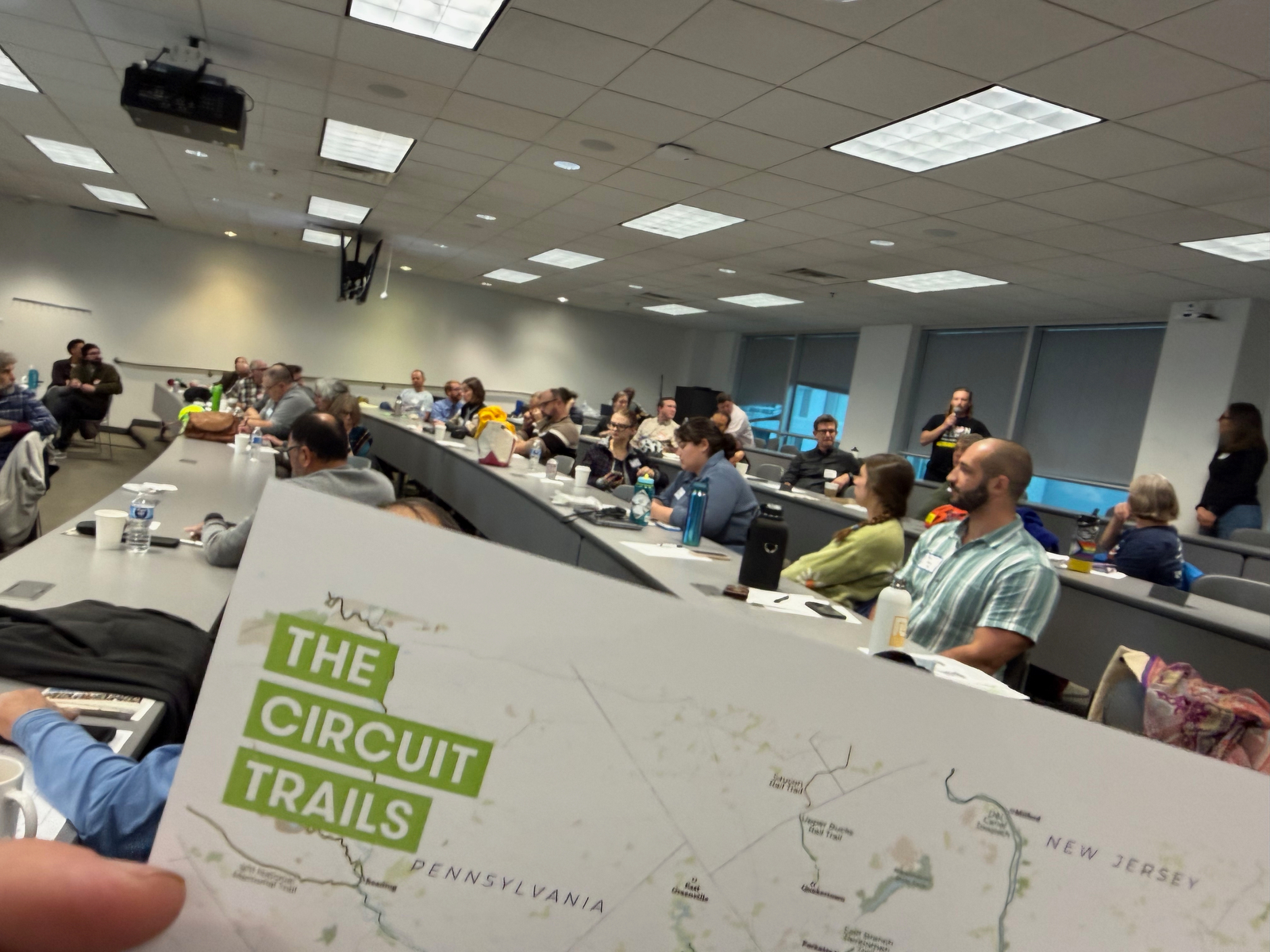
We’re thrilled to announce that that as of last month, Walk Around Philadelphia is the newest member of The Circuit Trails Coalition!
The Circuit Trails are comprised of over 500 miles of trails in the region – our walk uses several of them, intersects several more, and also trailblazes in places where we hope that new trails will eventually be developed.
Joining the Coalition provides rich new exposure and professional networking opportunities for the walk – we’re in good company… and we’re excited to use the walk to introduce neighbors to the many other trail opportunities in their backyards!
Somewhat related: This year I was also invited to serve on the City of Philadelphia City Planning Department’s Trail Plan Equity, Engagement, and Education Subcommittee. There’s definitely a lot of overlap in these communities, and they feel like great conversations to be a part of.
We work with our elected representatives.
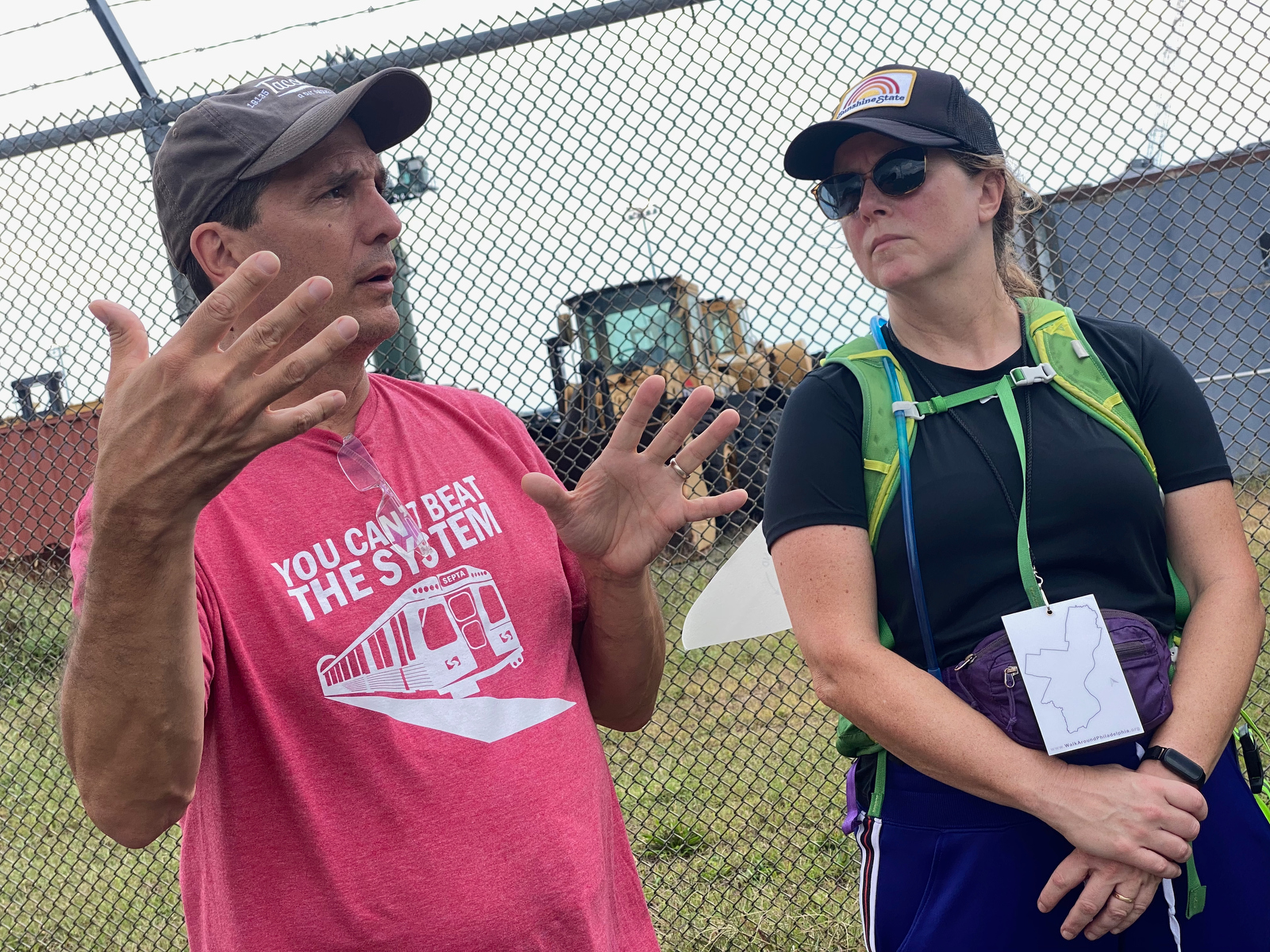
It’s been a treat having State Rep Joe Hohenstein (and his fantastic chief of staff Tara) join us regularly to walk his district’s edge with us (and also having him on that advisory board!)
We’ve had staff from other elected representatives offices join us on walk segments, and hope that someday all of our City Council members and Mayor might undertake (and complete!) the walk as well.
After all, in colonial New England it was literally required: town officials had to “perambulate the bounds” of their municipalities each year to maintain shared borders and civic accountability.
During this fall’s programs, Rep Hohenstein was able to tell us both about the massive PGW gas storage facilities that we’ve been curious about for years, and give us insights into the complex negotiations happening around our public transit funding crisis…
… and speaking of SEPTA….
We advocate for better transit together.
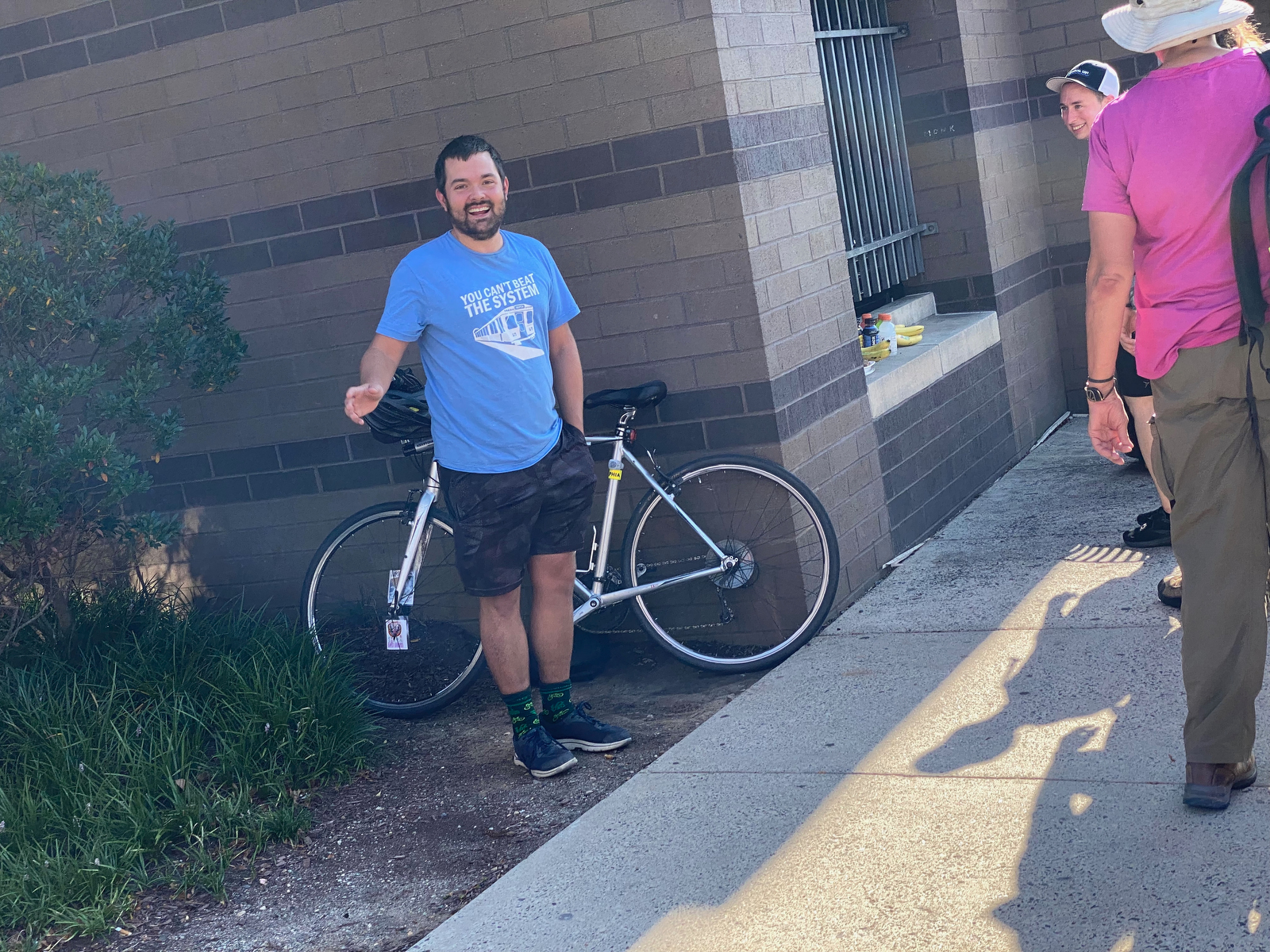
It’s been inspiring to see the work of Stephen over at Transit Forward Philadelphia as he coordinates the campaign to advocate for our public transit. Somehow amidst all of that work, Stephen still managed to both show up as a Trail Angel w/ surprise snacks and refreshing beverages on City Ave, and then come back and help facilitate one of our secondary groups the next day… Thank you Stephen!
Walk Around Philadelphia relies on SEPTA to get to our segment start and end points – the proposed regional rail service cuts would have been devastating for our programs (nevermind for the city) and we know that the current solution to fund operations by drawing from the capital fund is only a temporary reprieve. We hope that you’ll join Stephen in advocating for our public transit!
We learn from our experiences and from our data.
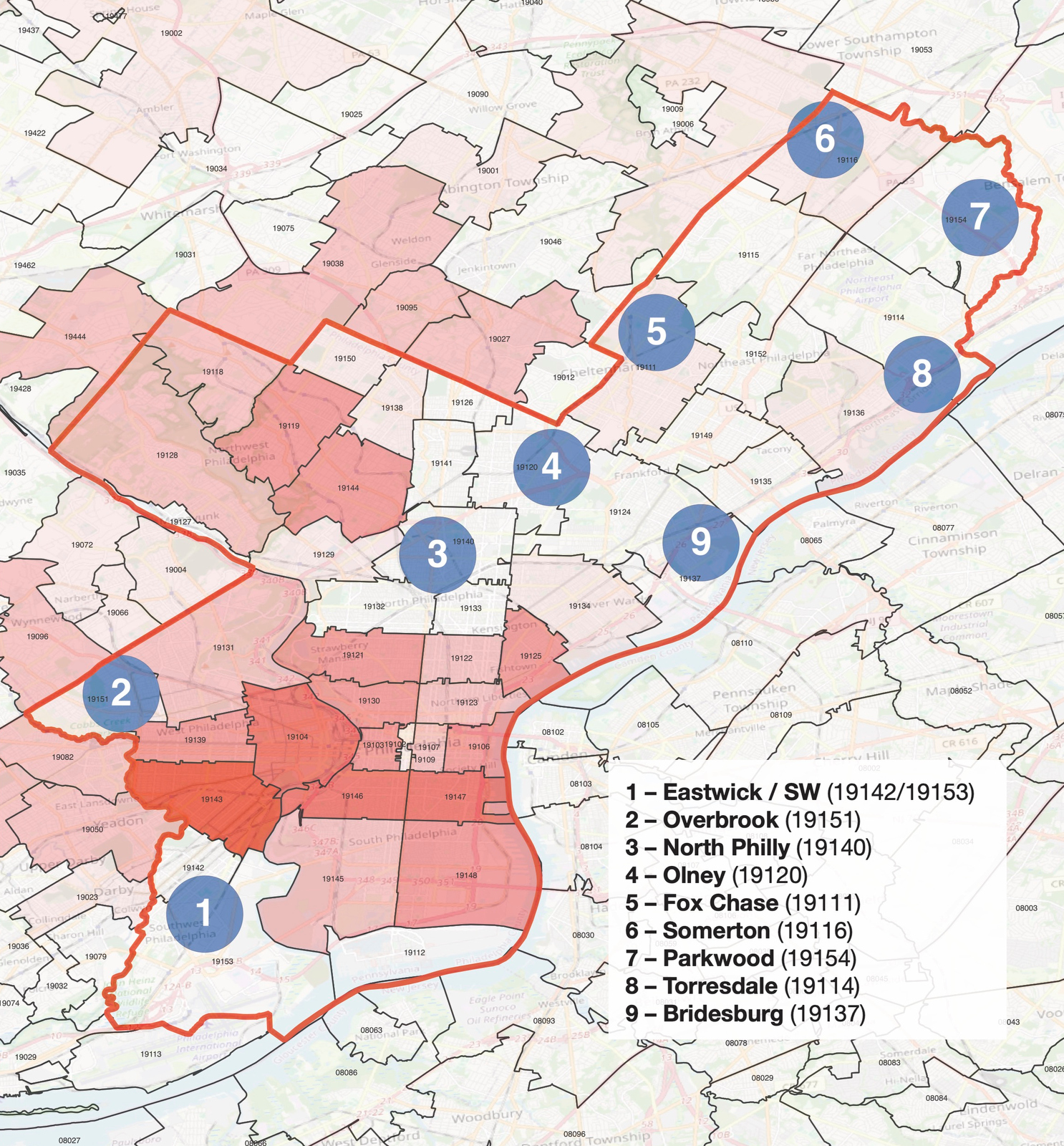
With every iteration of the walk, we get a little bit better with the back-end admin stuff: building systems, organizing information, and yes, gathering data.
Now that we have a bit of a better idea of where our walkers are coming from, we know where we can focus energy to extend outreach and invitations to residents of neighborhoods that aren’t yet represented in the walk’s participant pool.
All of this work — the accessibility, the partnerships, the outreach — is laying the foundation for something larger emerging beneath our feet.
We build something bigger than any one of us.
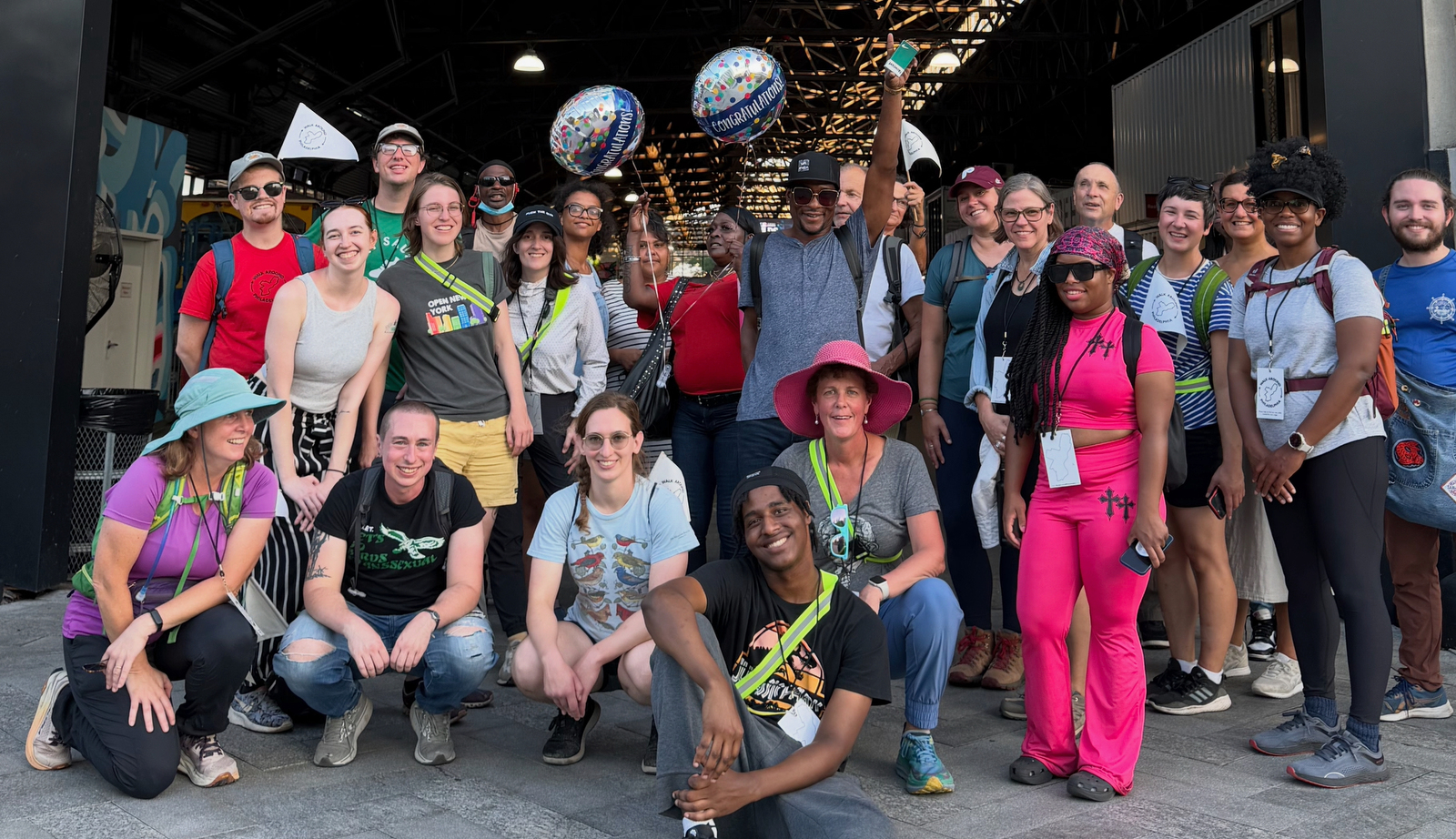
As interest grows, the Walk is becoming something larger than a solo artist’s project — it’s evolving into a small but mighty community institution, held by many hands and hearts.
Step by step, we’re creating a culture of connection, curiosity, and care that reaches from the city’s edge back into our neighborhoods and into the fabric of our everyday lives.
Much of what I’ve shared so far comes from my role organizing Walk Around Philadelphia. But the spirit behind that work doesn’t stop at the city’s edge — it shows up on my block too.
After nearly a decade of walking the perimeter and almost as many years as a block captain, I’ve come to see these roles as two sides of the same practice: noticing, welcoming, connecting, and helping build the kind of community we want to live in.
Which brings us closer to home, where…
4. We strengthen our neighborhoods.
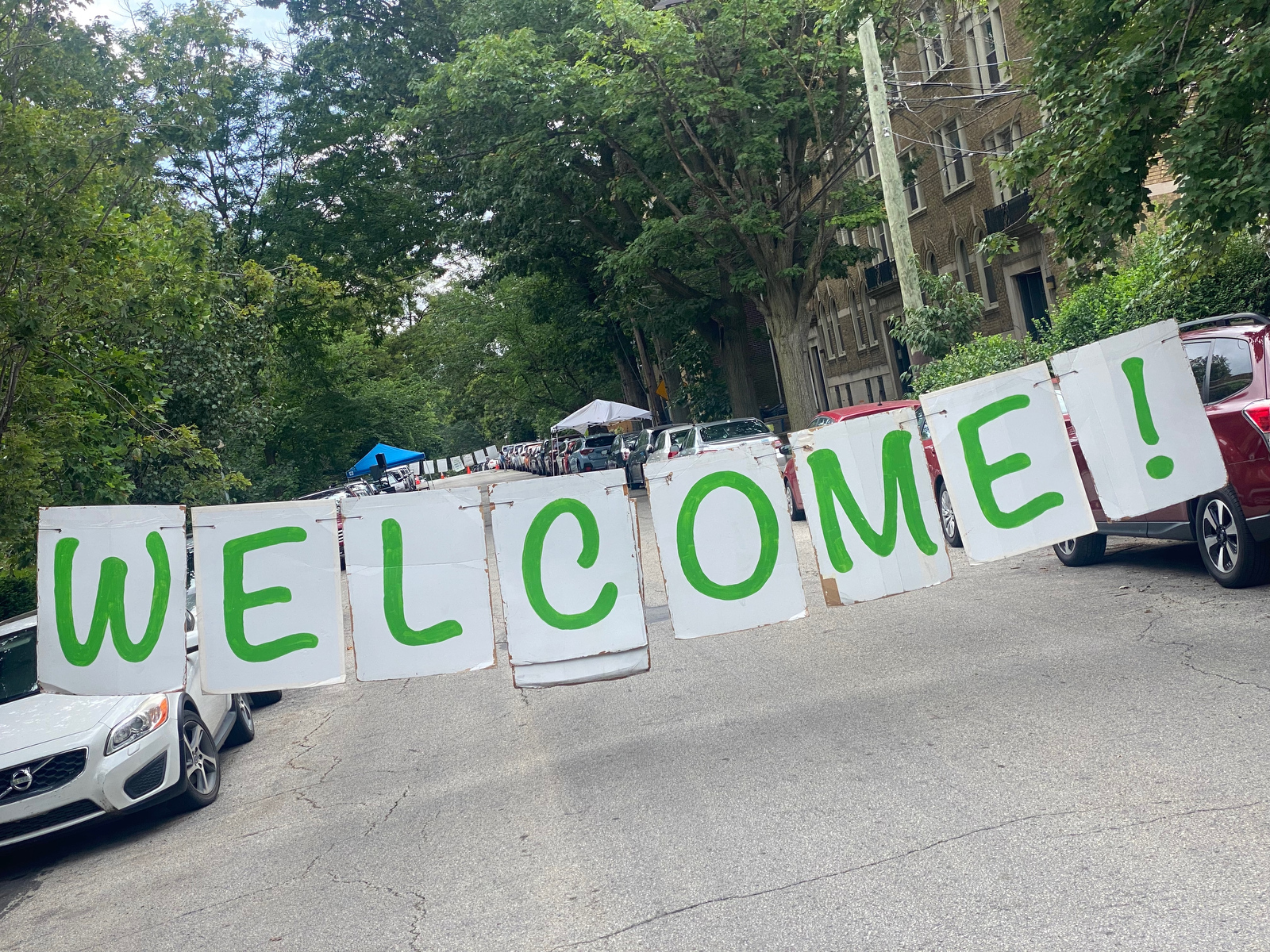
The Walk community is built step by step — and the same is true closer to home.
For me this year, that meant organizing block parties, hosting monthly dinners, facilitating a French conversation group, and wrangling a neighborhood email list that helps keep our little corner of the city connected.
Being a block captain also includes a healthy dose of untrained social work, bits of mediation, mentorship, and occasionally coordinating emergency advocacy efforts, but those are other stories… for now let’s just say that:
We get to know our neighbors in the streets.
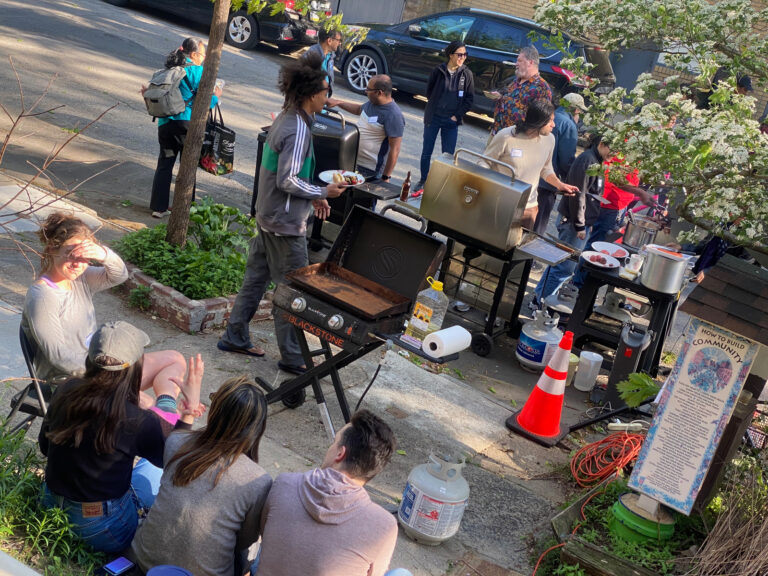
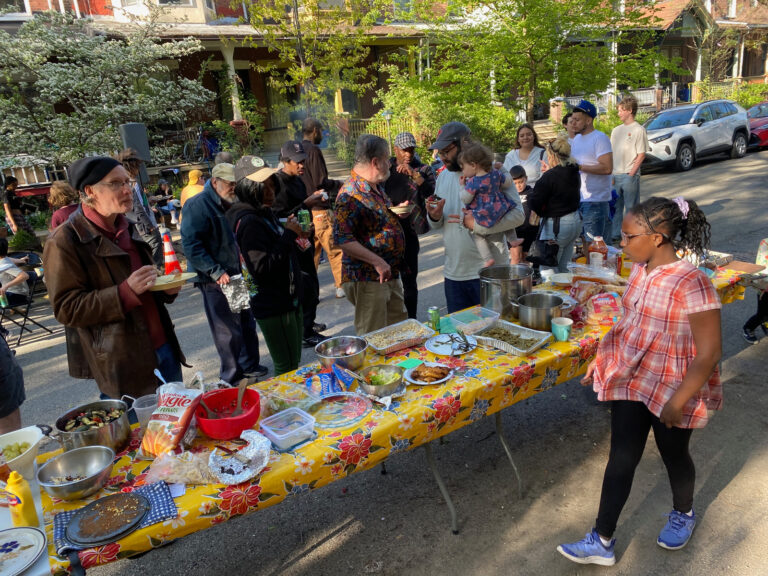
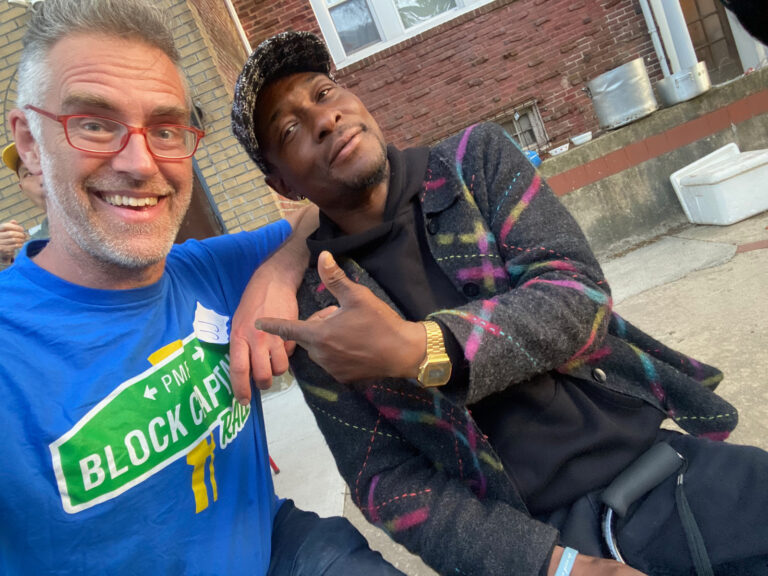
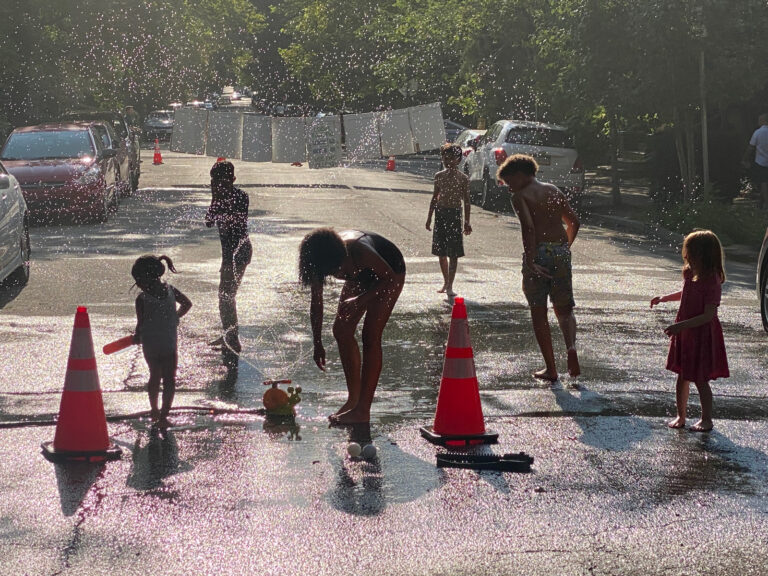
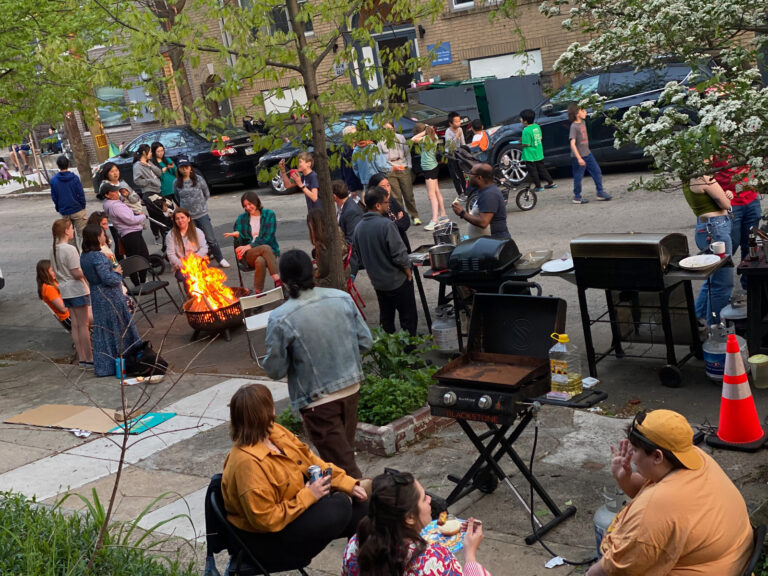
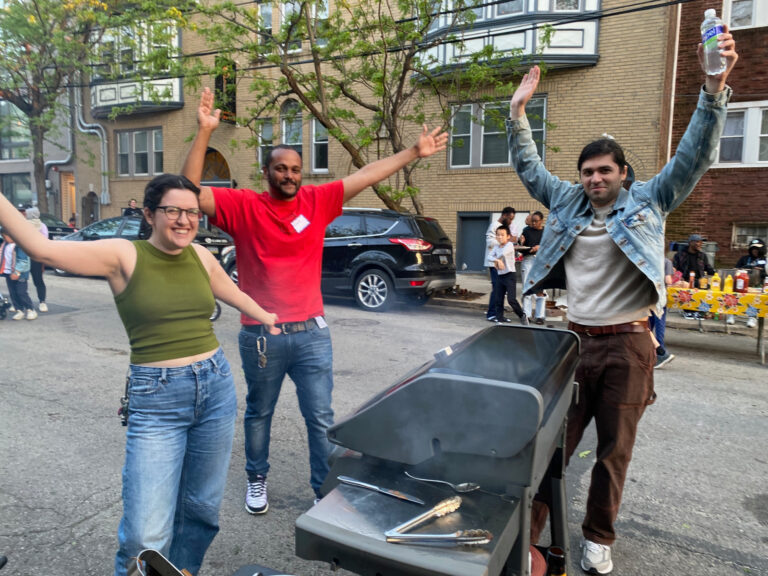
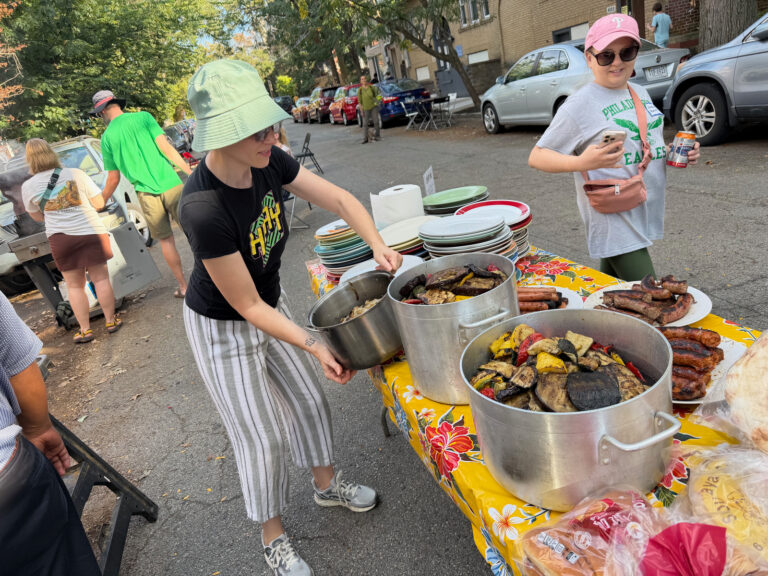
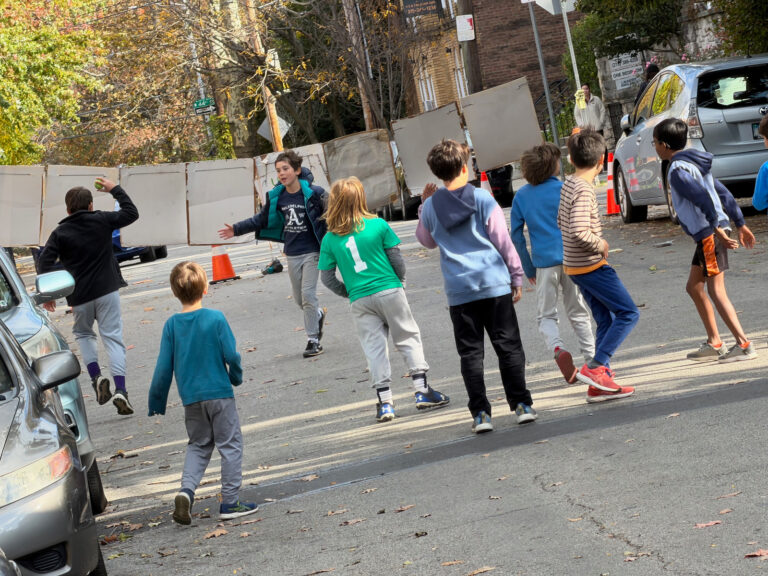
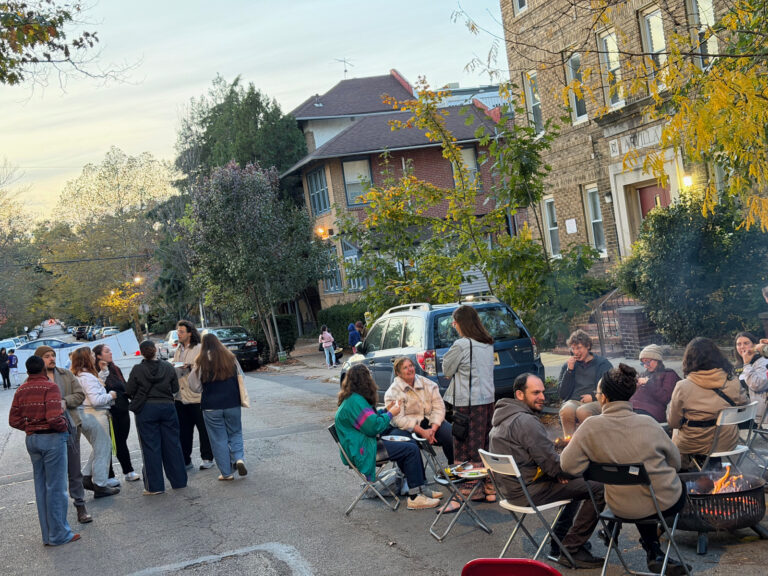
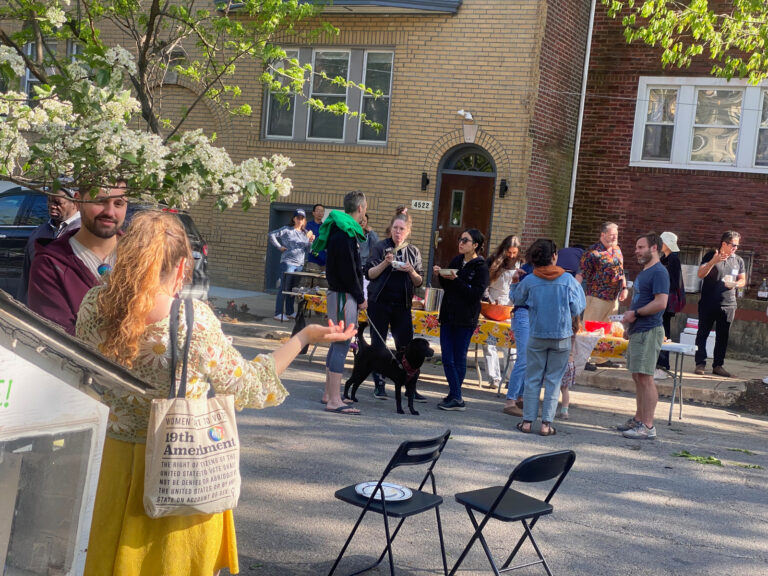
The City of Philadelphia lets you close most residential streets up to 5 times per year. I make it my business to get my neighbors together to take advantage of every single one of those opportunities.
And here’s where the magic happens: while it takes a bit of up front organizing work (and a bunch of behind-the-scenes tending to details,) once you get the ball rolling, people come out of the woodwork to participate in so many ways and it’s amazing. They help setup. They contribute food, drinks, cash. They help cleanup. They greet each other. They take turns on the grill.
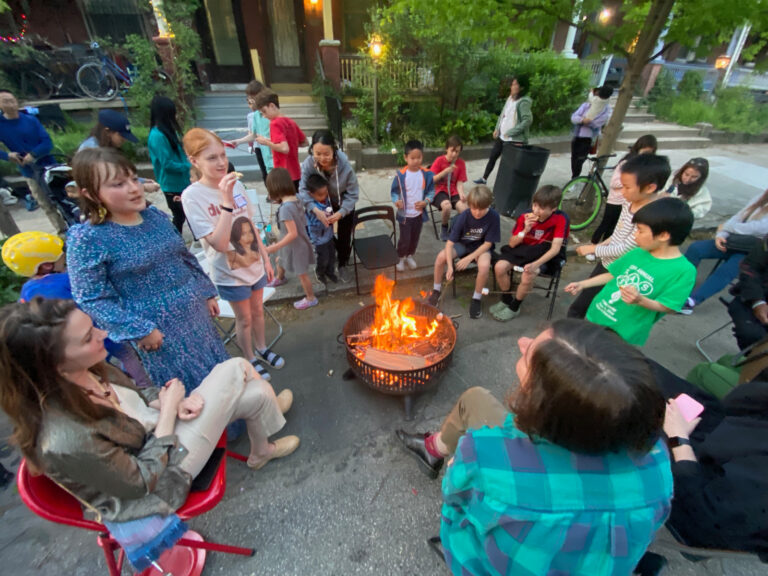
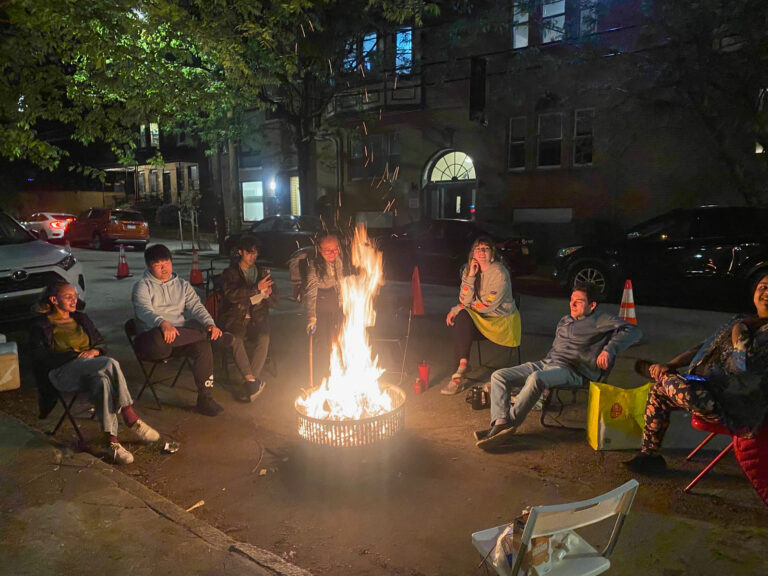
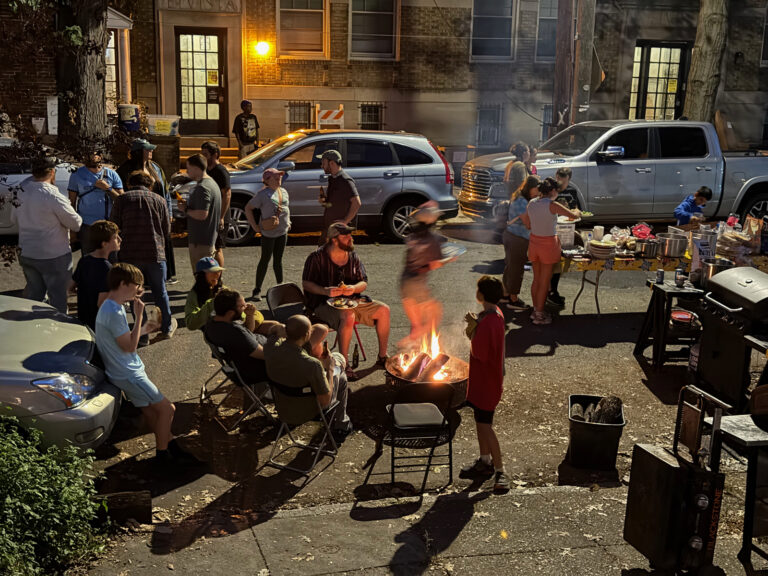
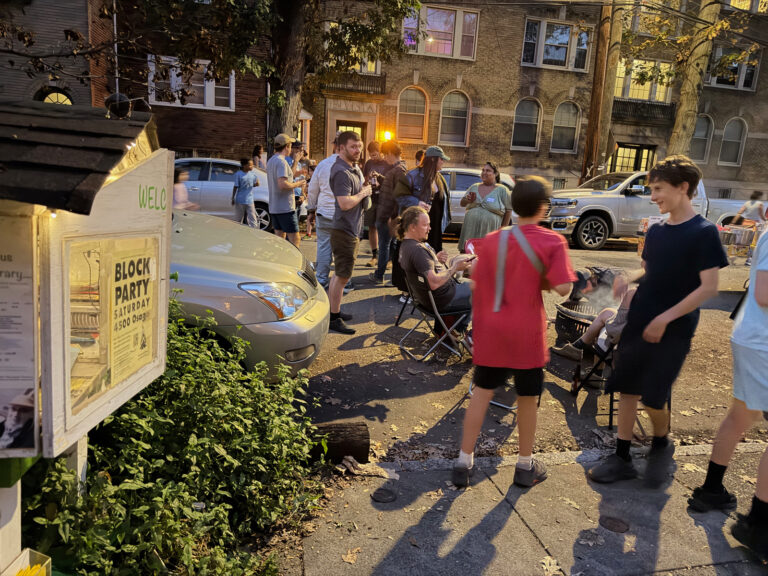
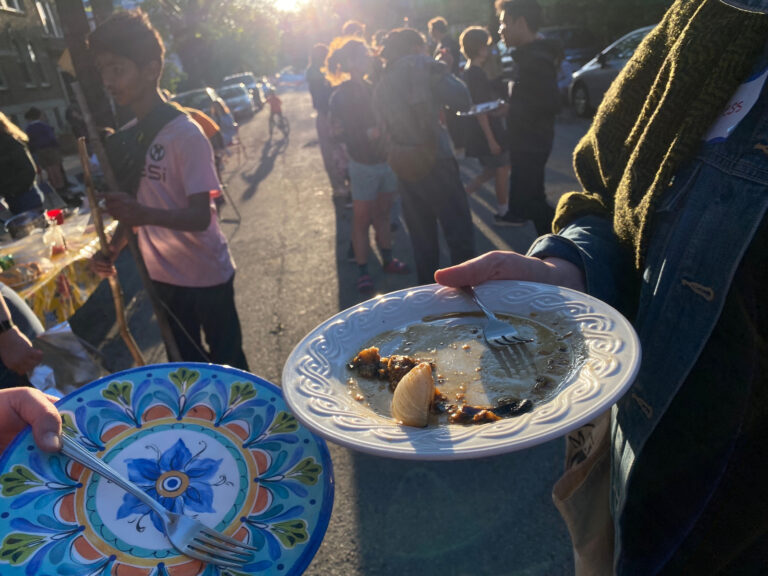
And when we’ve shared a meal in the street together, shared a turn chopping the veggies or tending the grill, lingered over coffee during setup, or gathered around the campfire after cleanup, that person we once barely noticed as a stranger on the sidewalk has been transformed into something else: community.
And then, the day that there might be an emergency, or a potential conflict, it’ll be a lot easier to navigate with those community bonds already in place.
We get to know our neighbors around the dinner table.
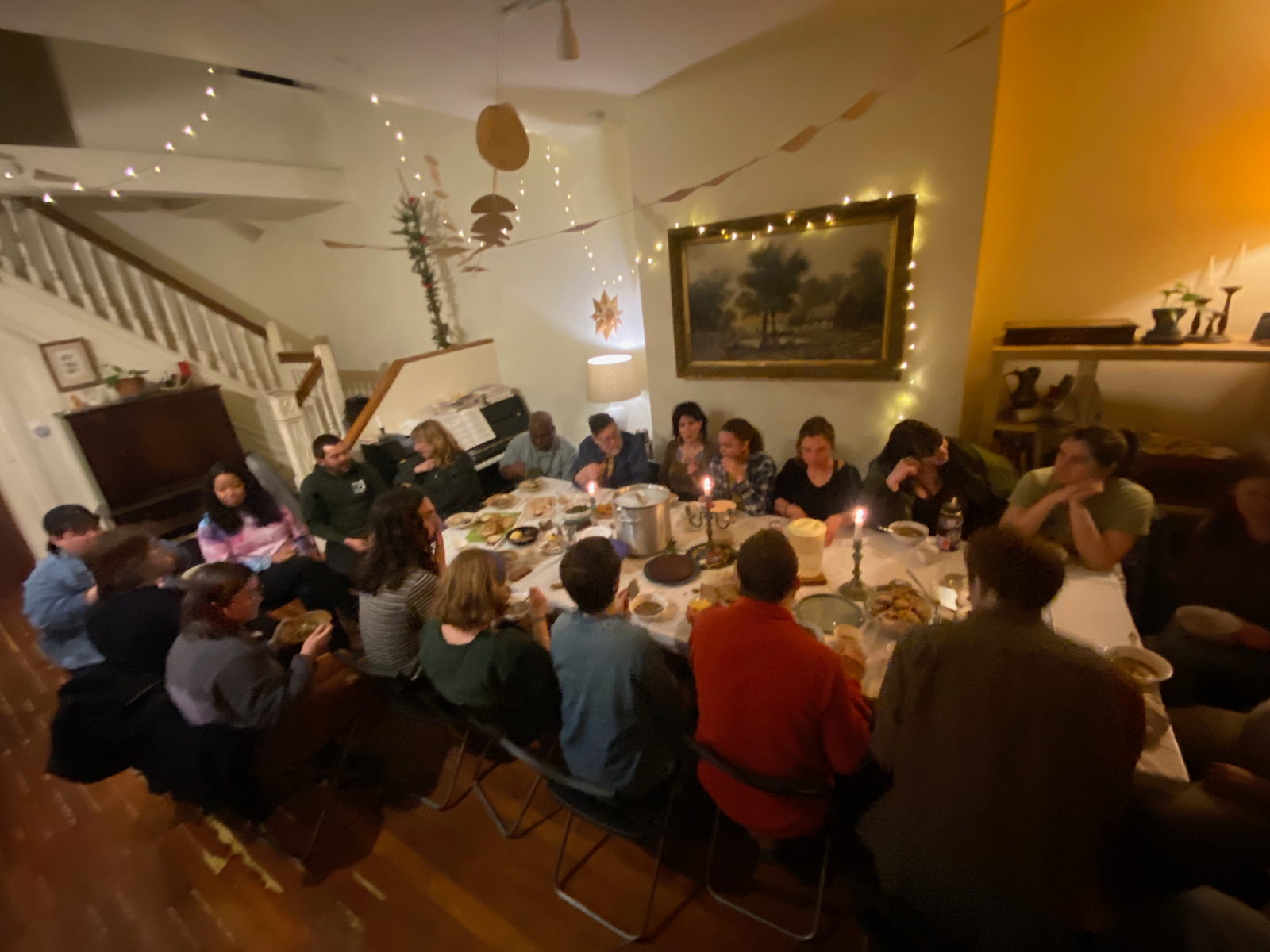
Here’s another gift: a giant table that I found by the side of the road. A room big enough to fit it. And a pile of wonderful neighbors who’ll pop over and share in a meal together.
I’ve been hosting these monthly dinners for years now, alongside a twice-a-month french conversation dinner that is basically the same thing, but en français.
It doesn’t actually take much: I whip up a hearty veggie soup & a loaf of bread. Folks bring other stuff to share and/or a friend if they’re so inspired. There’s not a ton of structure – it’s just a space for conversation and connection. And much like the block parties, it’s one where you can show up as you are, and contribute as you’re able.
But the work of community care doesn’t only happen in the context of big pilgrimage projects or festive community gatherings. It also happens in the quieter, more intimate spaces where we learn to care for one another — and for our own bodies.
Whether we’re tending a whole neighborhood or tending a single body, the heart of the work is the same: creating spaces where people feel seen, supported, and welcomed.
Which brings us to…
5. We care for each other, and ourselves.
The third facet of my public practice is as a Licensed Massage Therapist, and is shaped by the same commitments to creating welcoming, safe spaces for all.
And this year, my work as a massage therapist unfolded in new and meaningful ways:
We educate ourselves about wellness practices
Together with friend Megan (and my LMT colleague Kimberly and a crew of other wonderful practitioners), we put together a pretty lovely wellness fair at The Rotunda back in May.
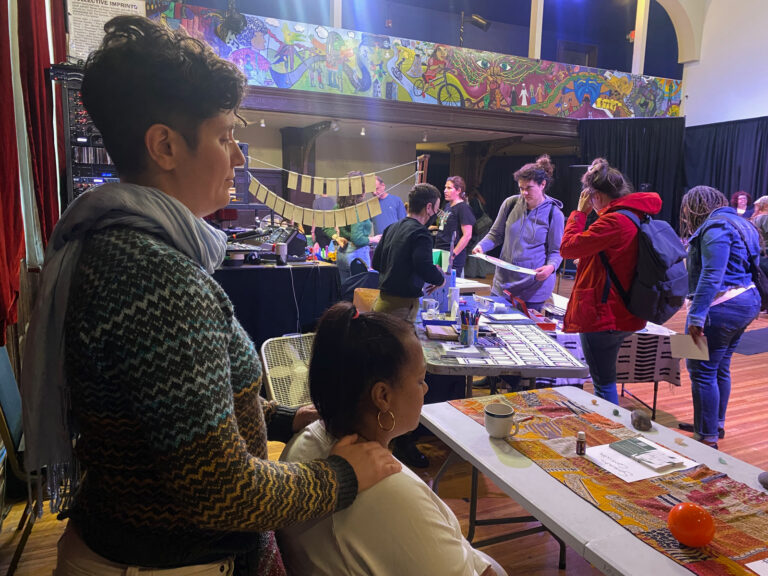
Kimberly & I offered drop-in chair massage as well as self-massage tips, and then we wrapped the event up with a sound bath experience facilitated by Coach Shay where Kimberly and Neha and I provided some hands-on bodywork while participants enjoyed the sound bath.
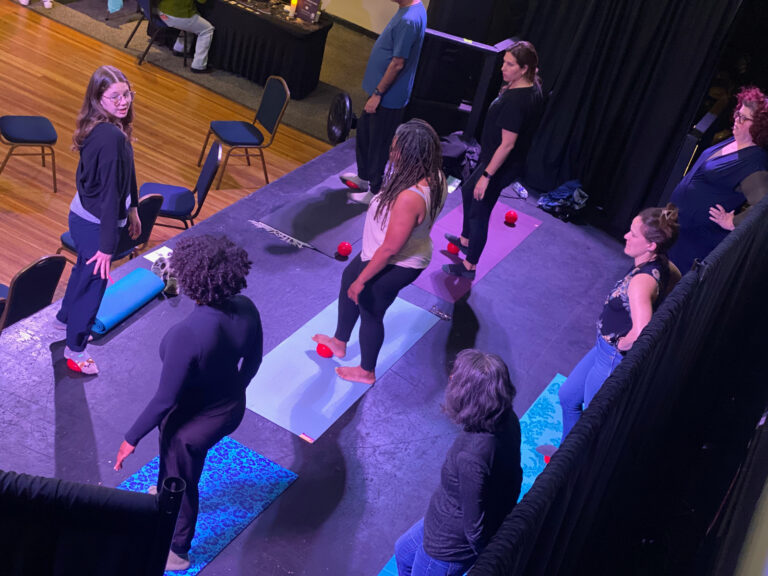
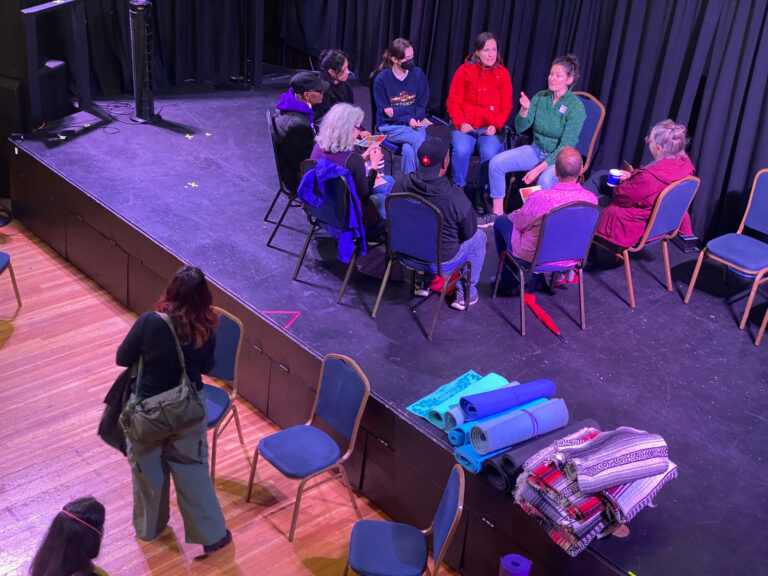
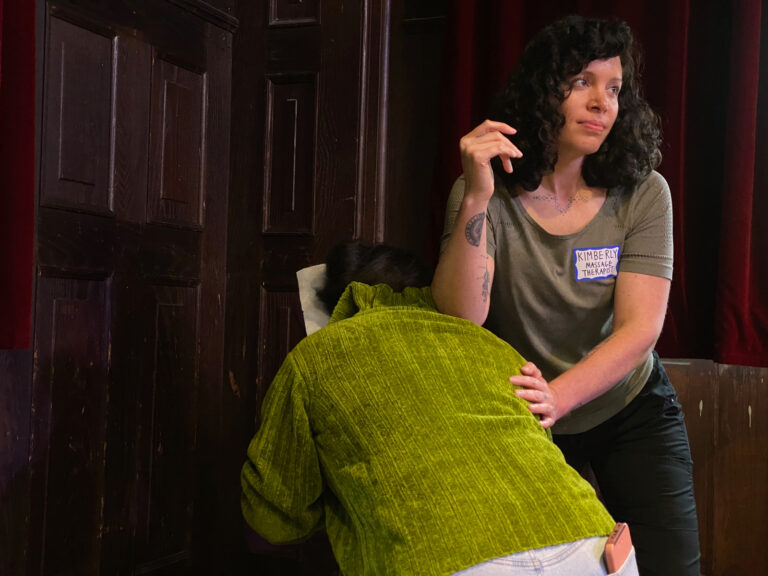
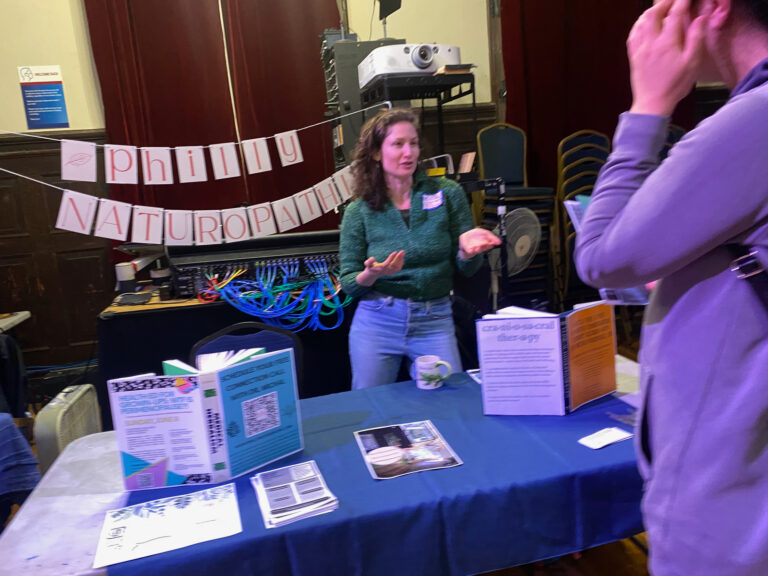
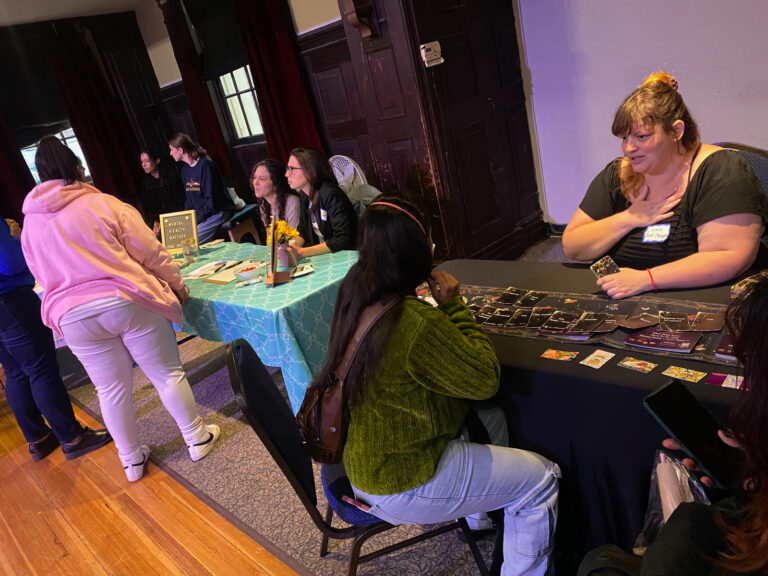
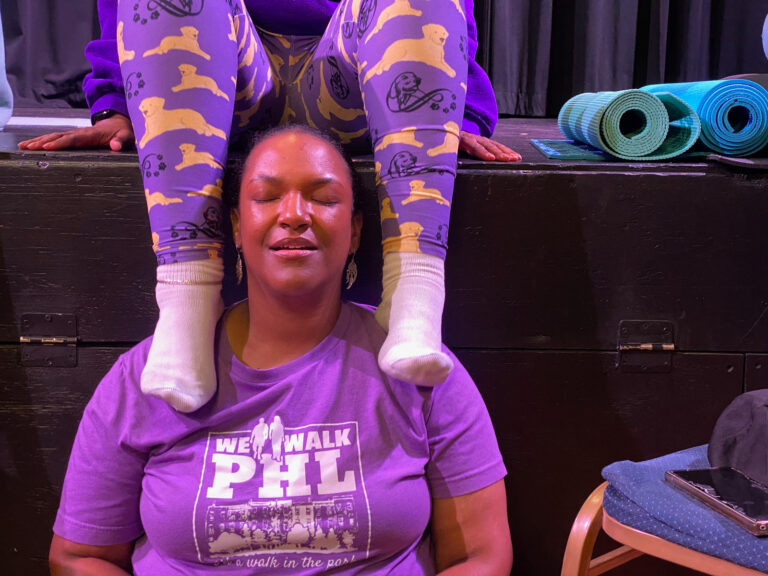
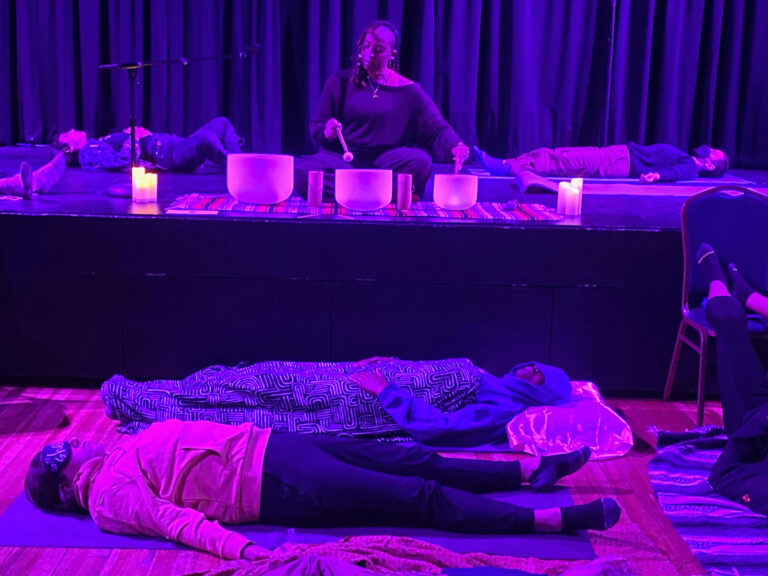
And yes, my co-organizer Megan is indeed that same Megan who earlier was Walk Around Philadelphia’s part-time project manager.
And yes, if you look closely at those photos you’ll catch a glimpse of WeWalkPHL organizer Nicole and another one of our walkers (Laurie) – it’s all connected!
We learn to care for each other.
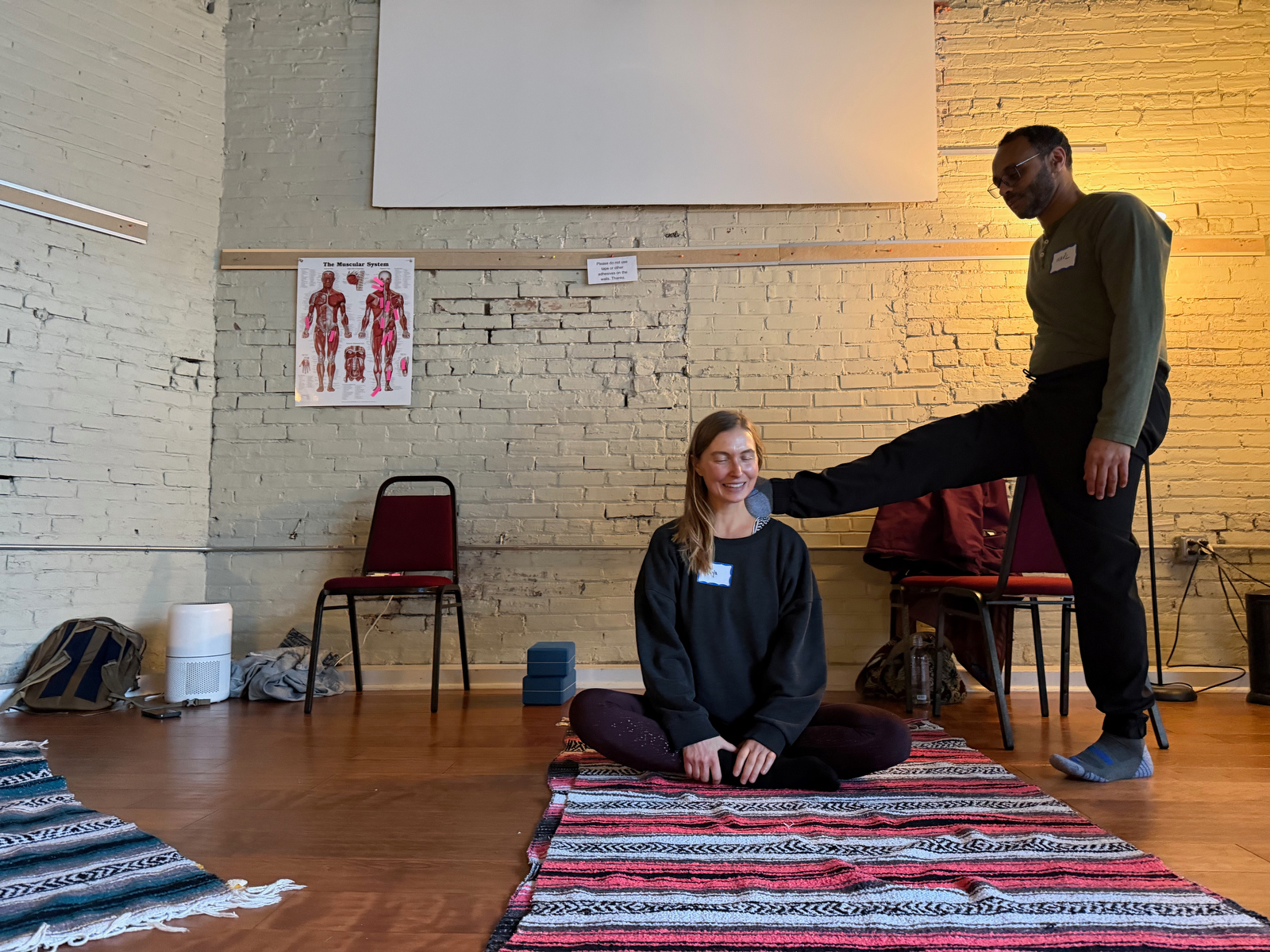
The May event set the stage for my more recent first public workshop offerings – the long awaited “Put your feet on your friends” partner massage workshop was a big hit!
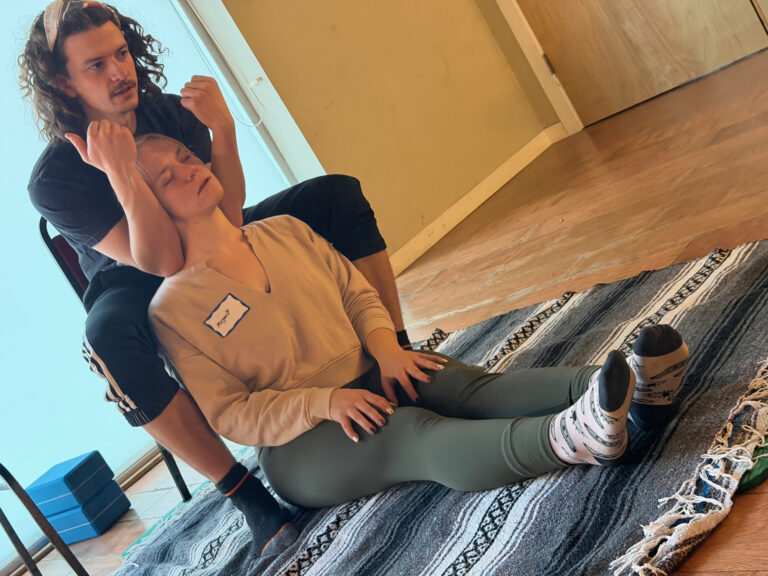
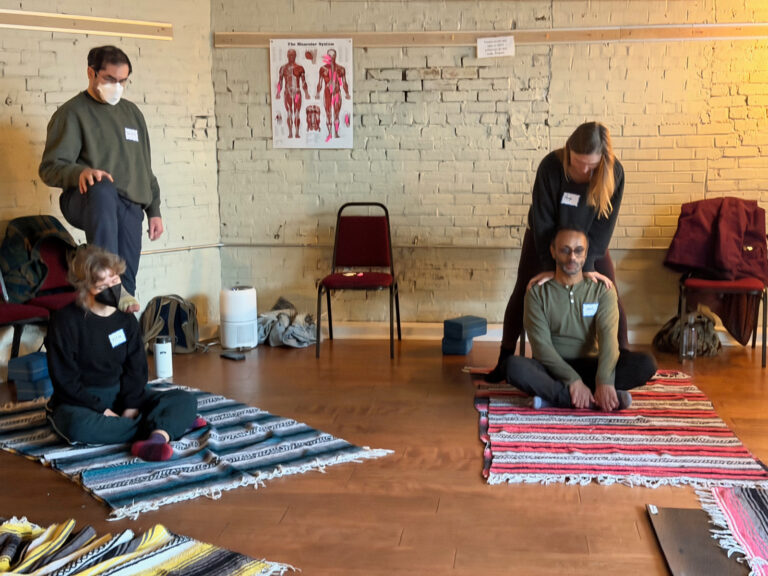
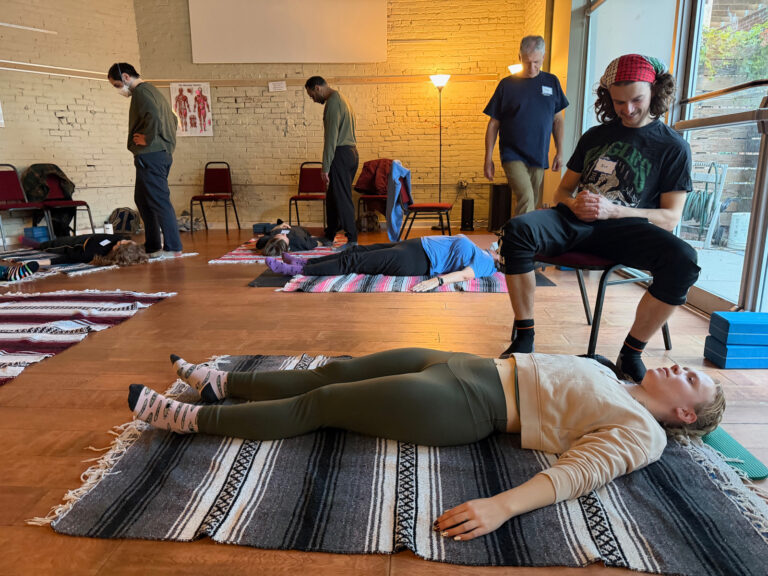
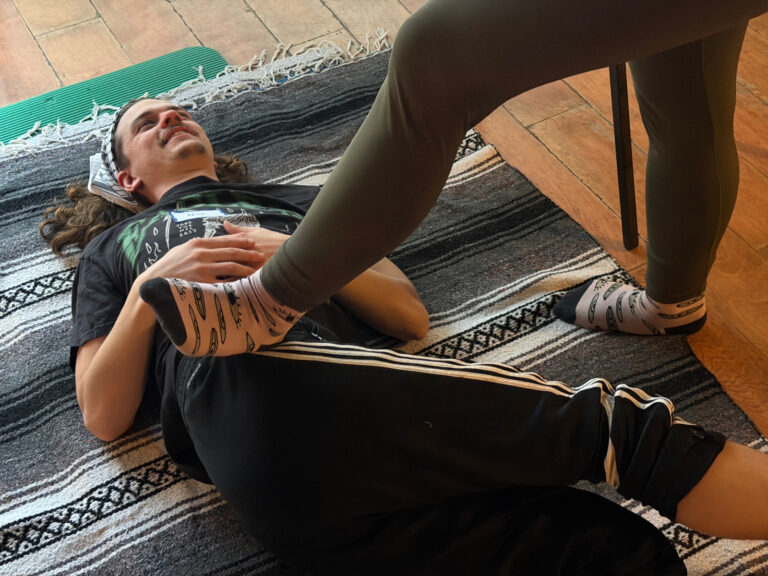
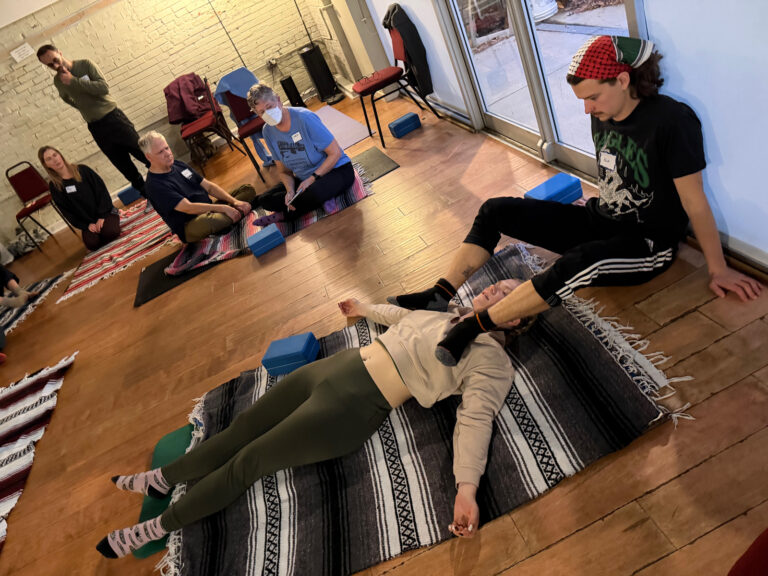
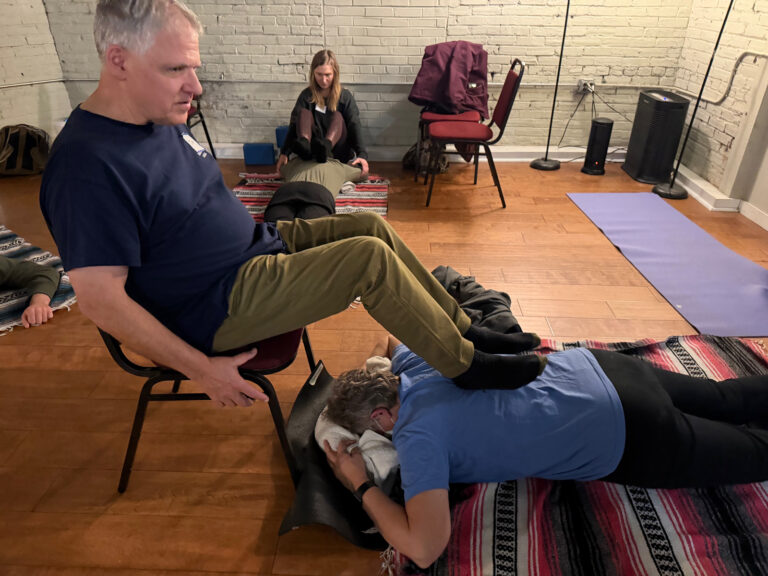
Stay tuned for seasonal partner-massage workshops – we might do one at Studio 34 in January or March.
We learn to care for our own bodies.
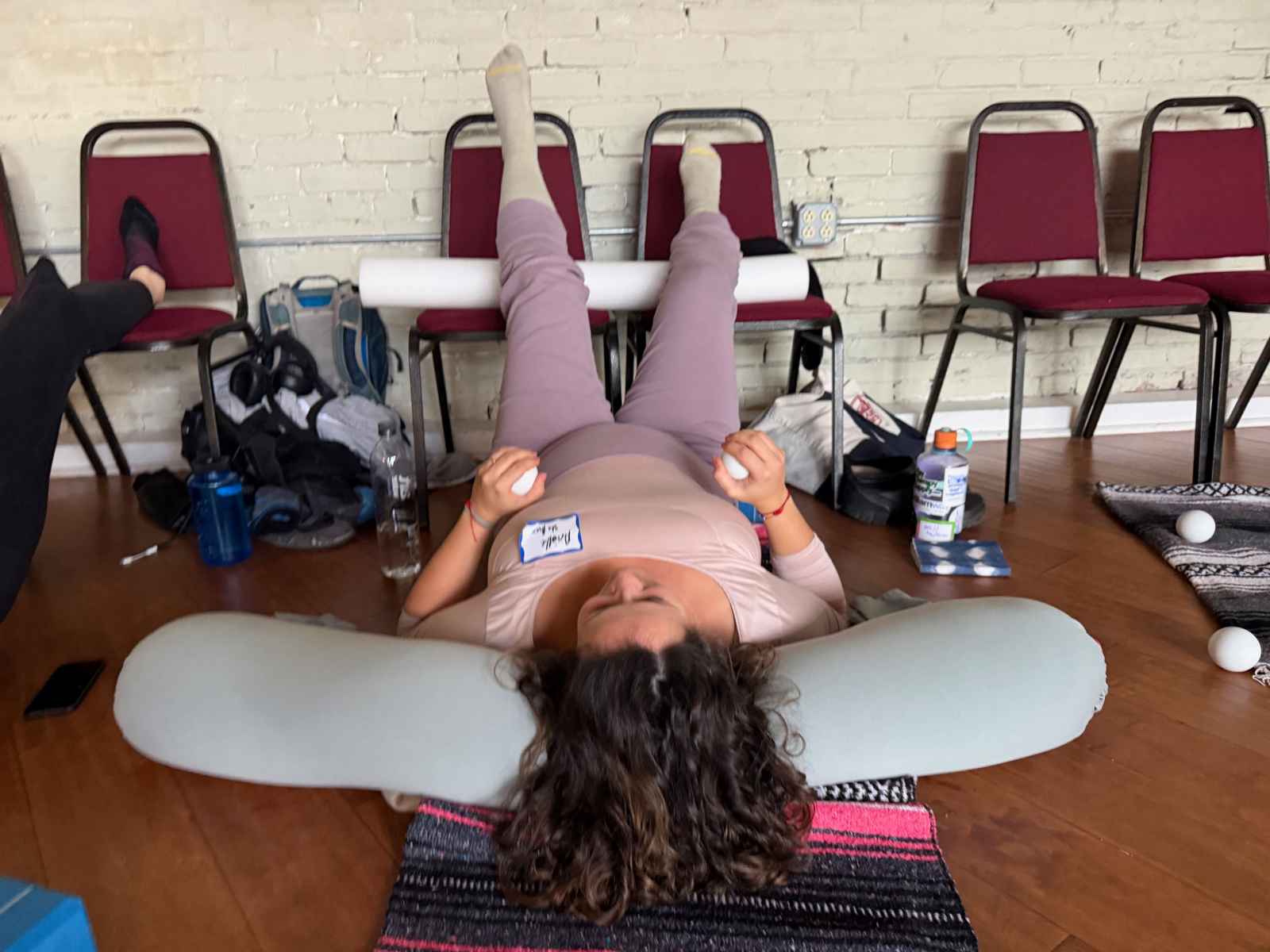
The partner massage workshop was paired with a self-massage workshop, where we explored ways to use our own bodyweight to deliver therapeutic pressure and release tension – it was also really well received and will also be one that I repeat in the new year.
One of the participants walked out exclaiming “I feel like I just got a massage!” – to which I replied: “You did! – you just gave it to yourself!”
We care for our colleagues.
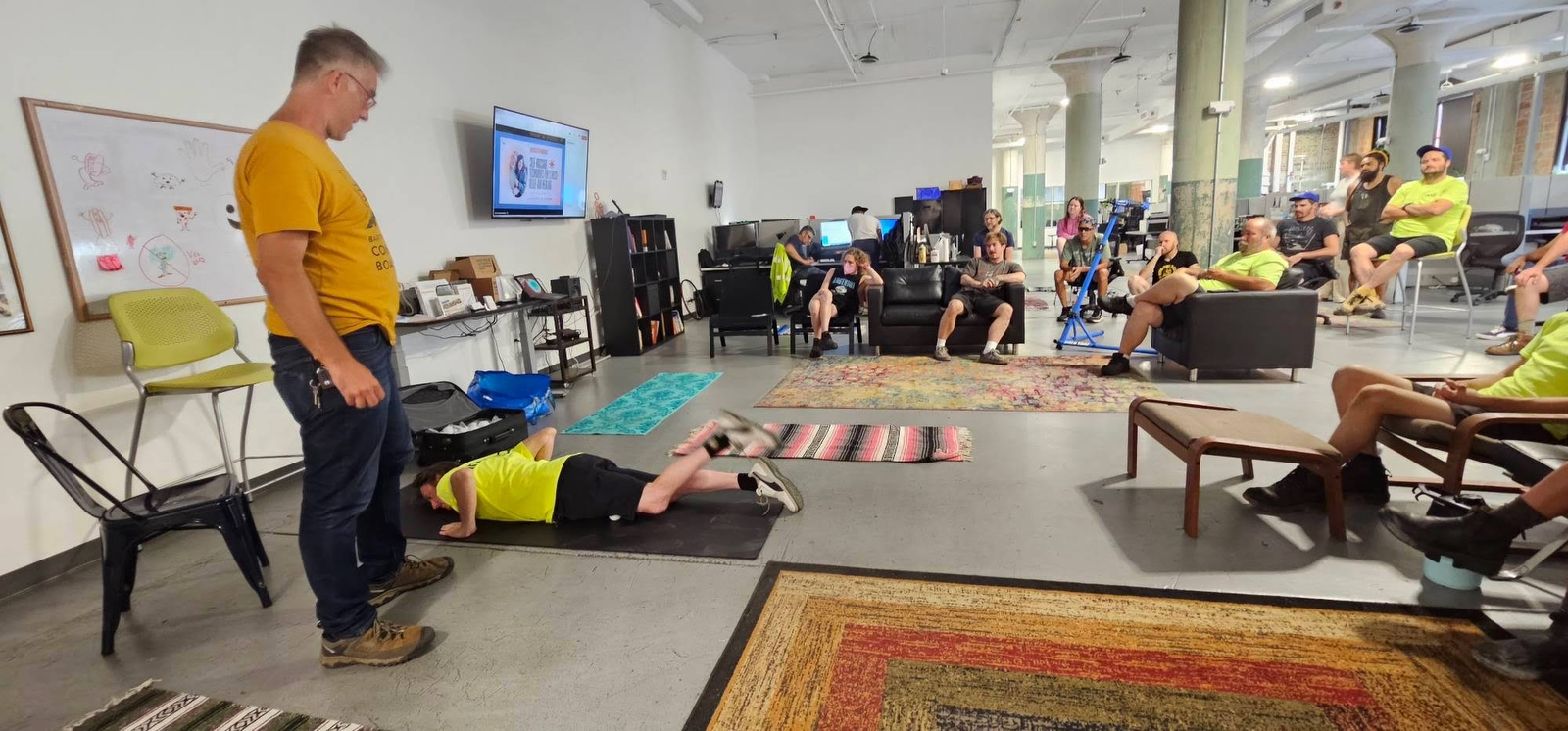
The self-massage workshop built on one I’d already done for the folks who run the Indego bikeshare system. It turns out that both their mechanics and administrators have a lot of aches and pains (from repetitive physically intense work and repetitive desk-sitting, respectively).
Wellness isn’t a luxury – it’s an investment in our most core infrastructure (our people!)
I was delighted to hear from one of the participants that they are now using those techniques as part of their daily routines to care for their bodies. These are truly skills that can last a lifetime and I’m psyched to share them.
We care for our most vulnerable neighbors.
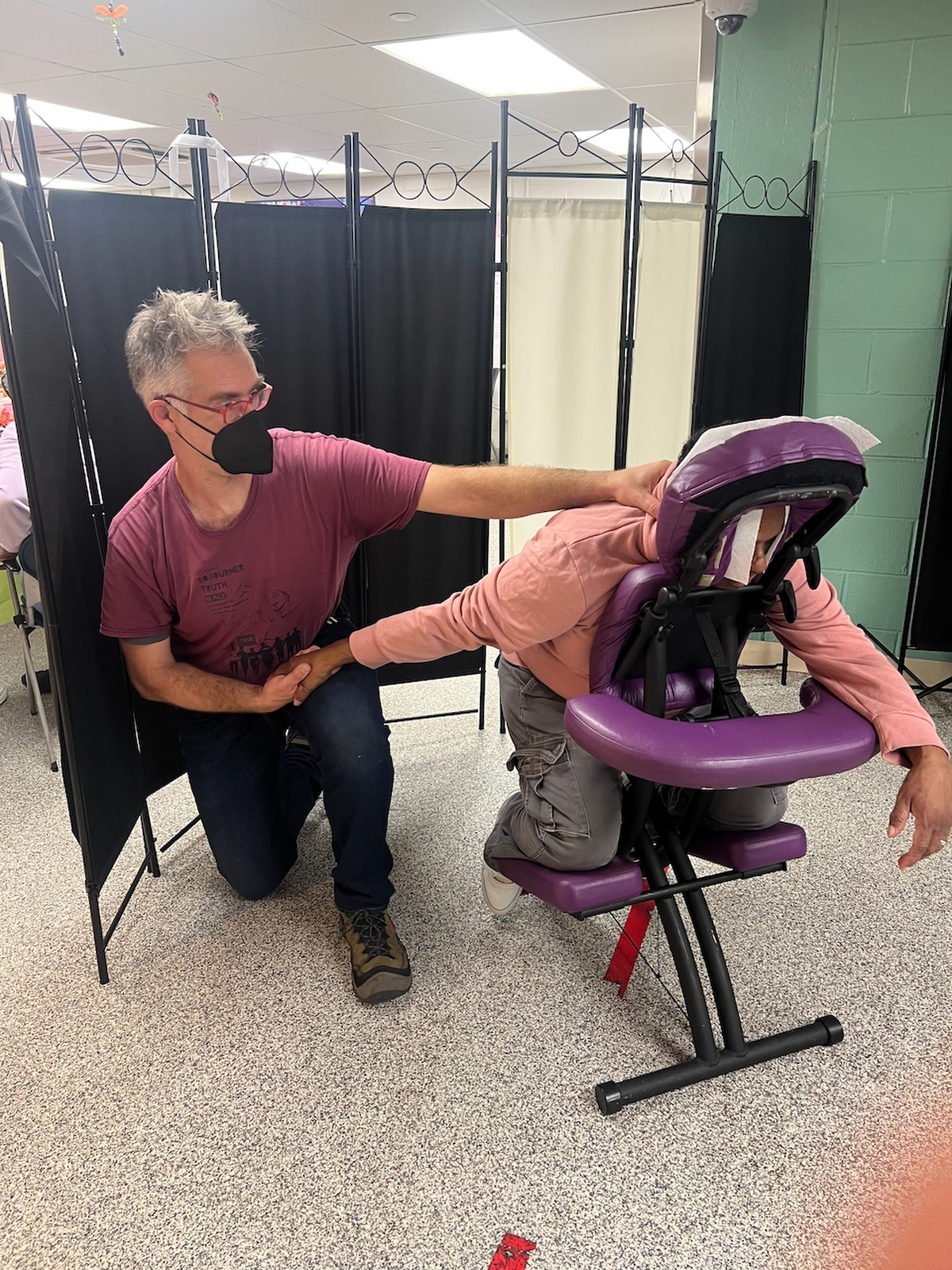
The year’s end is when folks sometimes bring me in to offer care to their teams via some chair massage sessions at holiday events and the like… but it’s also when I dropped back by Project Home’s Hub of Hope to offer some pro-bono care to our most vulnerable neighbors.
Because when I say that every single human body is sacred and deserving of care, I mean it, and that includes our unsheltered neighbors too.
If you’ve read this far, you’ve probably gathered that I devote a lot of energy to caring for others…
Working with so many people in so many ways also meant confronting my own edges this year — the places where I needed rest, help, or perspective. And doing all this work with and for others meant that I had to confront my own edges — the places where care, capacity, and community intersect.
And this is some of the most important work:
6. We learn, grow, and keep showing up together.
Of course, doing all of this work means learning — over and over — that I have limits too. This year brought reminders about pacing, capacity, and how essential it is to ask for help when we need it.
We can learn our own limits.
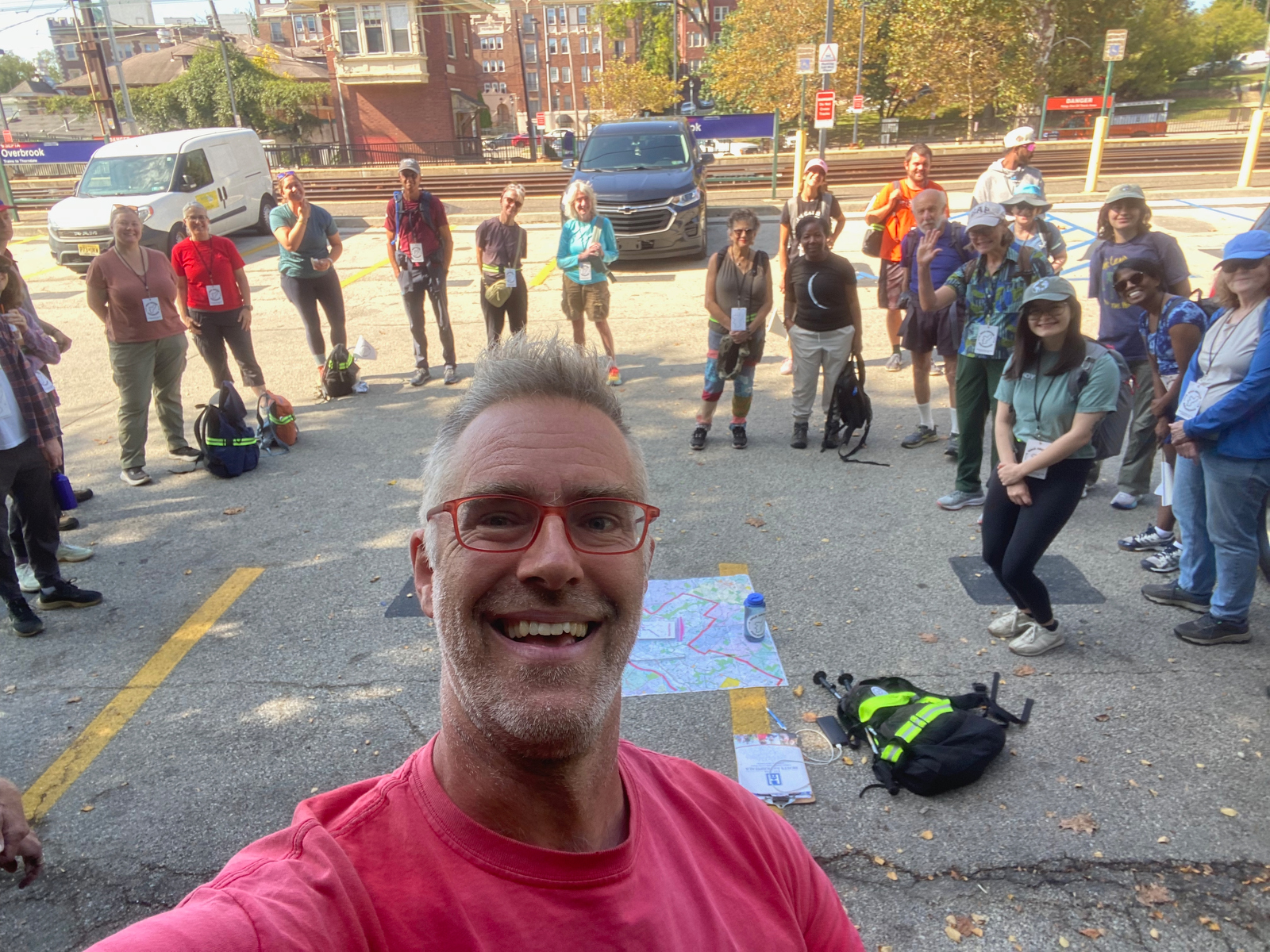
When I first set out to circumnavigate Philadelphia, I thought that I knew the city pretty well. It was amazing, and humbling, to gain an embodied sense of the scale and complexity of the city.
The city is vast — far vaster than the tidy grid William Penn imagined in 1692. When Philadelphia merged with the rest of the county in 1854, it became the enormous, complex landscape we walk today.
And just as the city grew, so did the walk — and so did my responsibilities. This year I reached (and sometimes exceeded) my own limits.
Because it turns out that you can’t take on the whole city on your own, and my enthusiasm for doing this work has led me to spread myself too thin. At this point, I’ve found (and exceeded) my limits. So my challenge now is to slow down, save the next big project ideas for later when I’ll have more capacity for them, and to instead focus on capacity building.
We learn to ask for help.
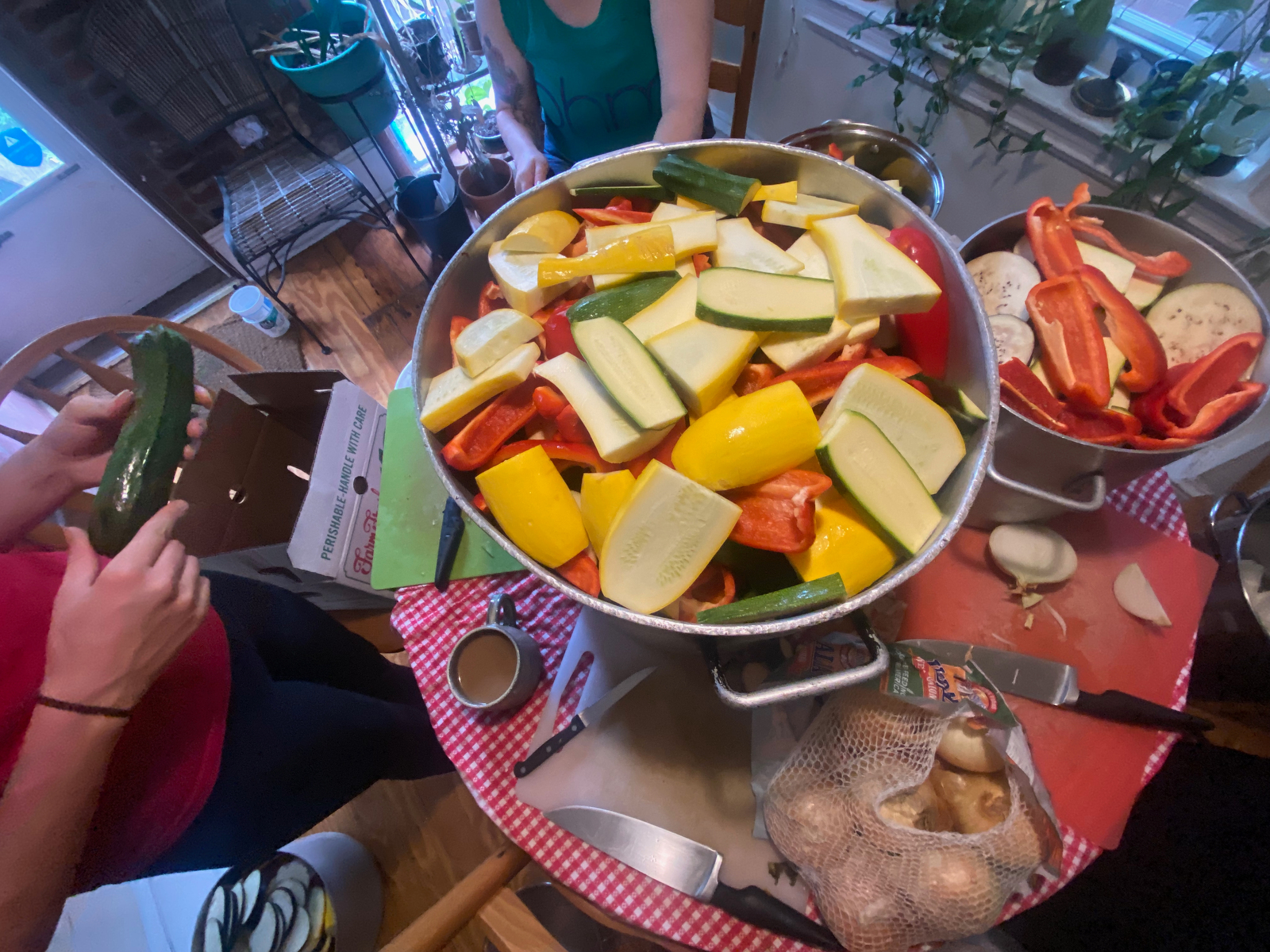
I’ve seen this with the block parties: I now schedule twice as many volunteers as I used to, and here’s the cool thing: it makes my life a little bit saner AND everyone who does it has fun. It gives them the opportunity to be of service. And some of them even like the idea that I might get to slow down and just enjoy the block party myself instead of trying to tend to everything all of the time.
I’ve also started putting out QR codes with options to chip in at the block parties to make it easier for folks to contribute, and they do – enthusiastically! It’s kind of amazing to see little bits of cash just start coming in, and to realize at the end of the day that I’ve managed to feed the whole neighborhood AND I’ll break even on all of the expenses rather than being a couple of hundred bucks in the hole.
And so my next step is applying this to the walk – because boy am I going to need your help with it!
We offer the walk as a gift—and offer gifts to the walk.
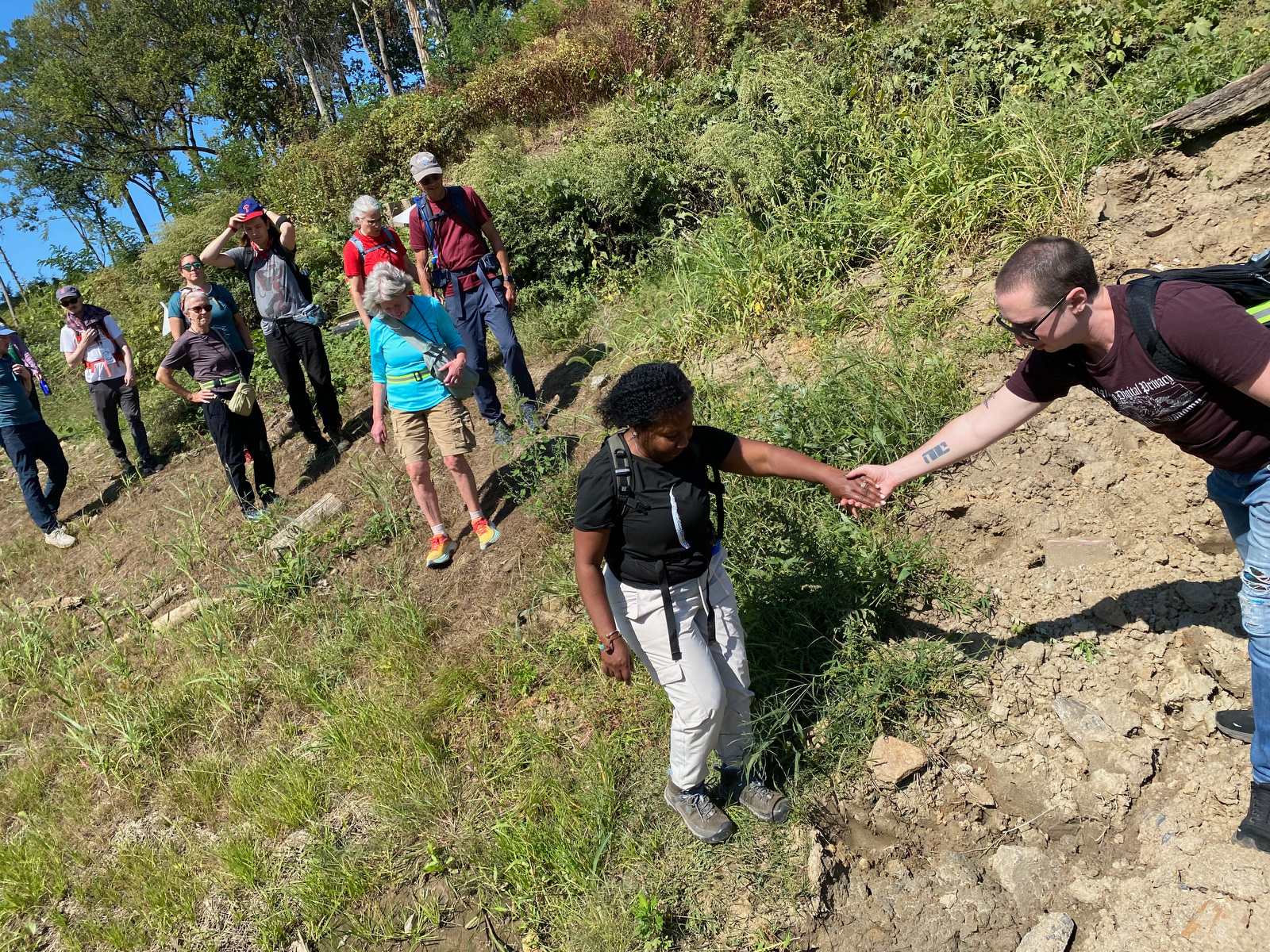
There’s another sweet story that came in via the discussion forums, where Curtiss asked about itinerary suggestions because he was planning on “Giving” Walk Around Philadelphia as a 60th birthday present… what a wild thing to offer someone – and what a sweet gift of experience.
Other walkers have opted to sponsor a stipend – making an additional contribution while signing up for the walk so that another walker facing financial hardship might be able to receive support – this too is the sweetest gift. In 2025, the walk provided $11,400 in stipends to walkers in need!
Another walker came back and made a contribution of $1,256 to support the walk after they’d completed the whole thing – they figured it as about $10 per mile. (you know who you are – thank you!)
And countless others have contributed in ways large and small. Every gift matters. If you have the means to make a contribution to support Walk Around Philadelphia, I’d be honored and it would be most helpful. Literally every bit helps.
We honor each other’s boundaries.
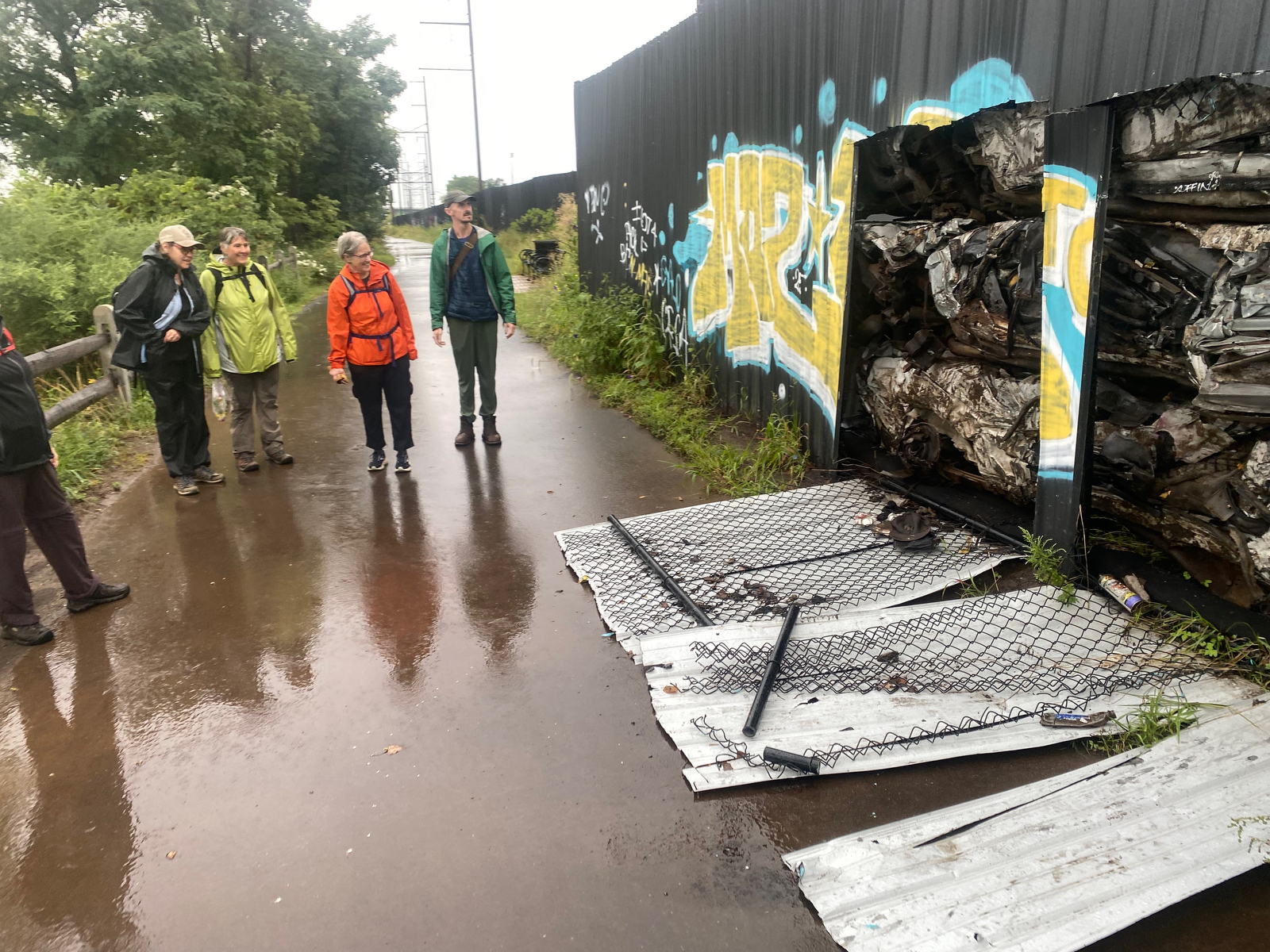
You might have gathered that, with the need to build capacity to meet continued interest in this project, I’m going to have to up my fundraising and start asking people (yourself included) for money.
That’s not always comfortable for me – it’s a growing edge where I’m pushing my boundaries. (That’s what the walk is all about after all.)
But the walk is also about honoring our boundaries. So while I’ll be occasionally asking for financial support for this project more explicitly, please know that this functions just like all of my other invitations: you are always welcome, and never pressured.
I would welcome your support in developing this project’s next steps and will thank you for any contribution, AND I will also thank you for honoring your boundaries if you decline.
There are so many ways to be a part of this and we’d love to have you join the walk in whatever ways suit you.
(More on that below!)
We gather to celebrate our accomplishments.
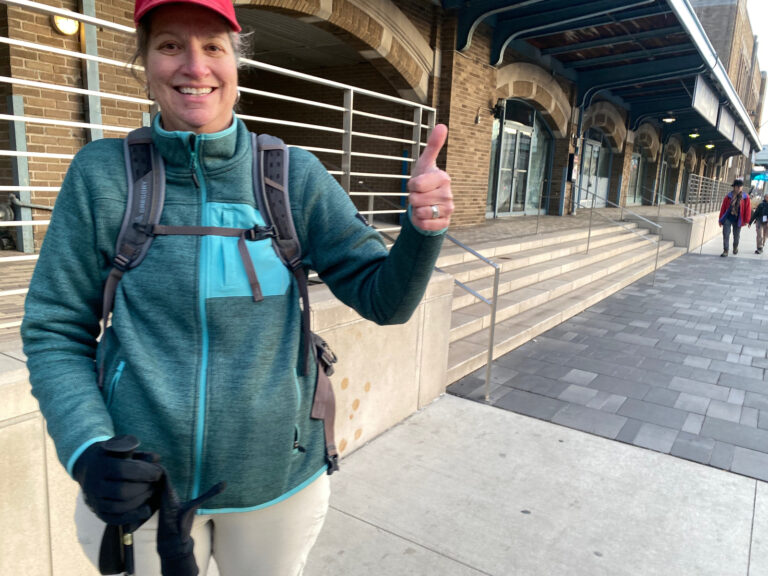
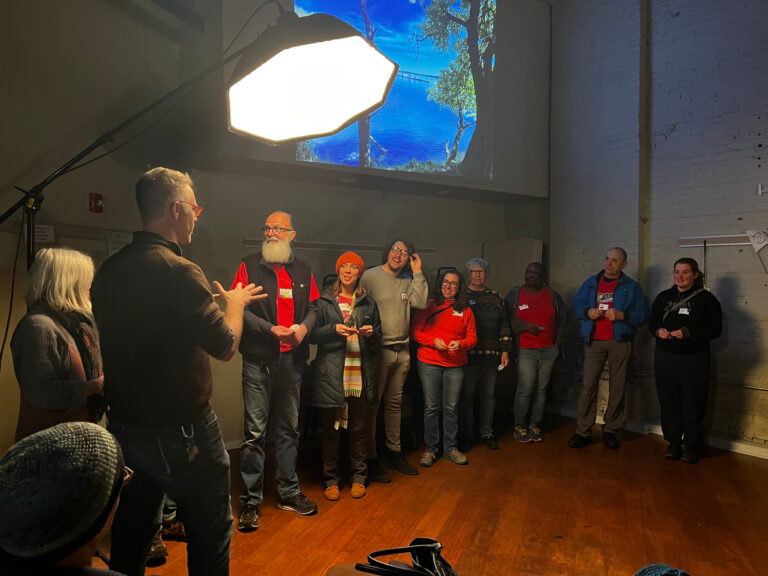
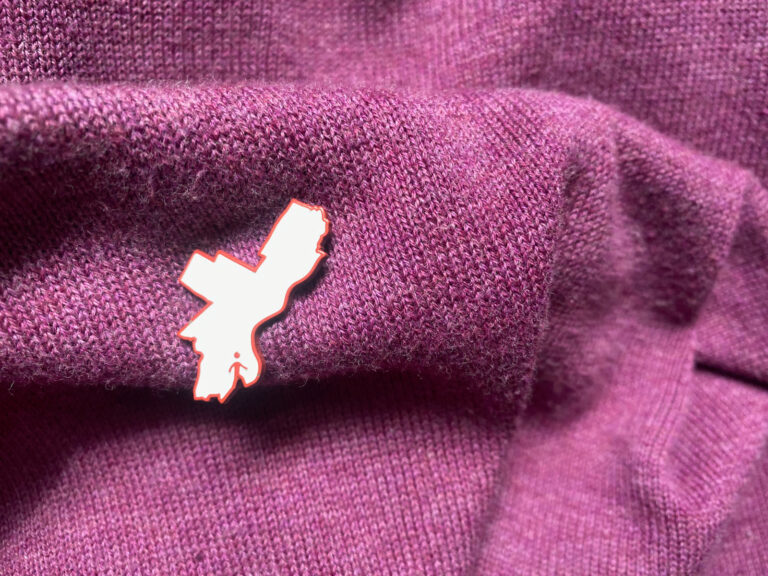
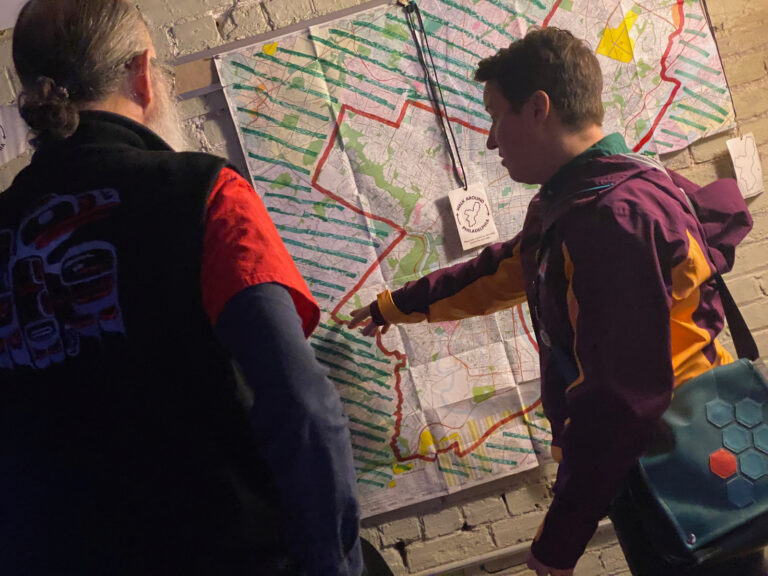
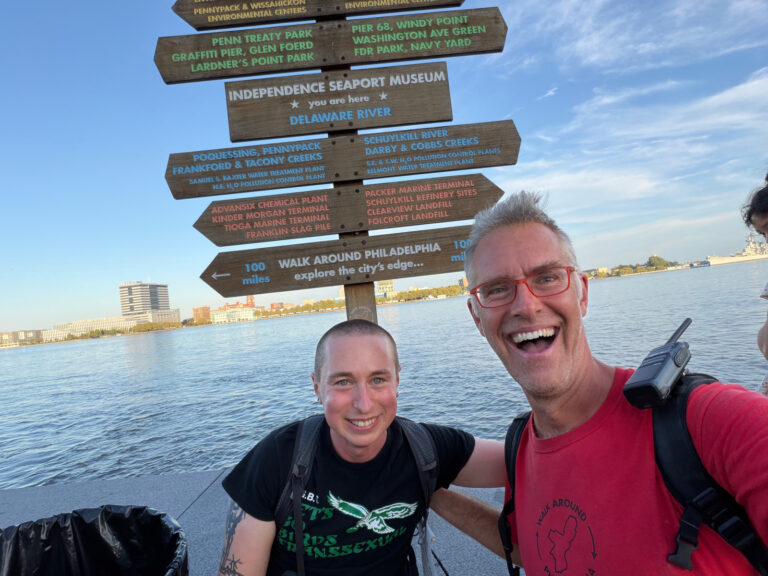
We’ll be closing out 2025 with our Year-end celebration & Circumnavigator Awards, where we’ll recognize folks like Kendra & Lisa who completed their first full loop around the city’s edge this year and award them their Circumnavigator pins. We’d love to see you there!
Saturday December 13th
@ The Cedar Works
4-7pm
You can also check out other upcoming events – there’s a new Walk Around Philadelphia installation opening up at Cherry Street Pier that will be on the ground floor through most of 2026 (in addition to our existing installation upstairs)
And while the stories and images might help some of what has unfolded this year, sometimes it helps to see the scale of what we built together in clearer terms:
By the Numbers:
What We Made Possible in 2025
This year, together, we made something extraordinary happen:
- 469 unique individuals registered for Walk Around Philadelphia events
- 314 unique attendees across all walks
- 873 walk registrations
- 585 total attendances on the ground
- $11,400 in stipend support to walkers
- 1,000+ people engaged through community events
- 32 long walks (~ 10miles)
- 12 medium walks (~5 miles)
- 4 language walks (Spanish + French)
- 18 printmaking & community outreach tabling events
- 7 happy hours & celebrations
- 4 bonus accessible edge events
- 4 artist talks & facilitated walks for private groups
- 3 virtual events
- 4 advisory board meetings
- 1800+ followers on the instagrump contraption, despite following nothing but the city border
- 2600+ on the walk specific newsletter list
- 5,000+ reached through installations, maps, and public engagement
- And more than we can keep track of out there walking the edge on their own like Nathan, Nancy, Curtiss and William…
PLUS all of the block captain work (5 block parties, 34 neighborly dinners, regular mentoring, constant tending, occasional crisis management) etc…
Let’s just be clear: that is A LOT.
These numbers don’t capture everything — but they begin to show the scale of what unfolded this year.
And this is where I need your help.
Because while all of this work is fantastic, somewhere the time / energy / money balance and the external / internal balance are a little bit out of whack. It’s time to build capacity:
Support the next phase of the Walk
As we approach the ten-year anniversary of Walk Around Philadelphia, we’re standing at a real turning point. What began as five days of walking in 2016 became five years of artistic inquiry, followed by another five years of public programming and partnerships, and has become a proven model for connection, curiosity, and civic engagement.
But interest is now growing faster than a small, artist-led effort can sustain with just a few hours per week of paid admin support. We’re ready—and needing—to evolve into an organization capable of welcoming more participants, deepening partnerships, and making the Walk accessible citywide. To do that, we’re going to need your help!
If this work resonates with you—if you believe in building a city where people meet across difference, where neighbors feel belonging, and where we can practice the kind of world we want to live in—I invite you to support this transition.
Your contribution helps lay the foundation for this long-term vision:
Twenty years from now, the Walk will be a shared civic tradition — a rite of passage that connects people across neighborhoods, backgrounds, and life circumstances.
Here’s the future we’re building toward — a future that is entirely possible if we invest in it now.
1. Every young person in the region will have the chance to circumnavigate the city.
From the wealthiest suburbs to the most underserved parts of North Philly, students will experience the Walk as part of hands-on learning or graduation traditions.
We’ve already seen early glimpses: youth from the Natural Creativity Center have completed the Walk twice (and counting), and Dori walked it for her senior project in Lower Merion.
As these programs grow, generations of young people will enter adulthood already connected to the city’s furthest reaches— and lifelong Philadelphians will explore those edges as a way of seeing their own city anew.
2. Every college student, newcomer, and transplant will have access to the Walk as an initiation into their new home.
Universities will integrate the Walk into new-student orientation, helping young adults step beyond campus and meet the larger city — and their everyday neighbors.
New residents moving here for work or life circumstances will join the Walk through employer programs or simply because they’ve heard it’s the way to get to know Philadelphia while making real human connections along the way.
(Some of this is already happening — both with the work that we’ve already done with universities like Penn, Drexel, Temple, Ursinus, and St Joseph’s, and with the people have moved here and used the Walk as their first act of belonging.)
3. Returning citizens and under-resourced Philadelphians will be able to walk the city’s edge as part of a supported path toward reentry, connection, and opportunity.
In the future we’re building toward, the Walk will be a place where people returning from incarceration — and anyone facing financial hardship — can participate fully with dignity and support. As long as 20% of Philadelphians live in poverty, at least 20% of every walk group will be stipend-supported, ensuring that the Walk remains accessible to those who stand to benefit most from connection, stability, and community.
Before release, returning citizens will have the option to learn about the Walk and begin preparing for it. Afterward, they will complete the circumnavigation alongside prospective employers, social-service providers, and neighbors trained to be supportive companions — restoring trust, building relationships, and expanding access to social capital and new opportunities.
In time, some returning citizens may even become walk facilitators themselves, guiding visitors who travel from other cities to experience this journey.
And in small, magic ways, pieces of this vision have already taken place as well.
That’s the future we’re walking toward — and you’re part of how we get there.
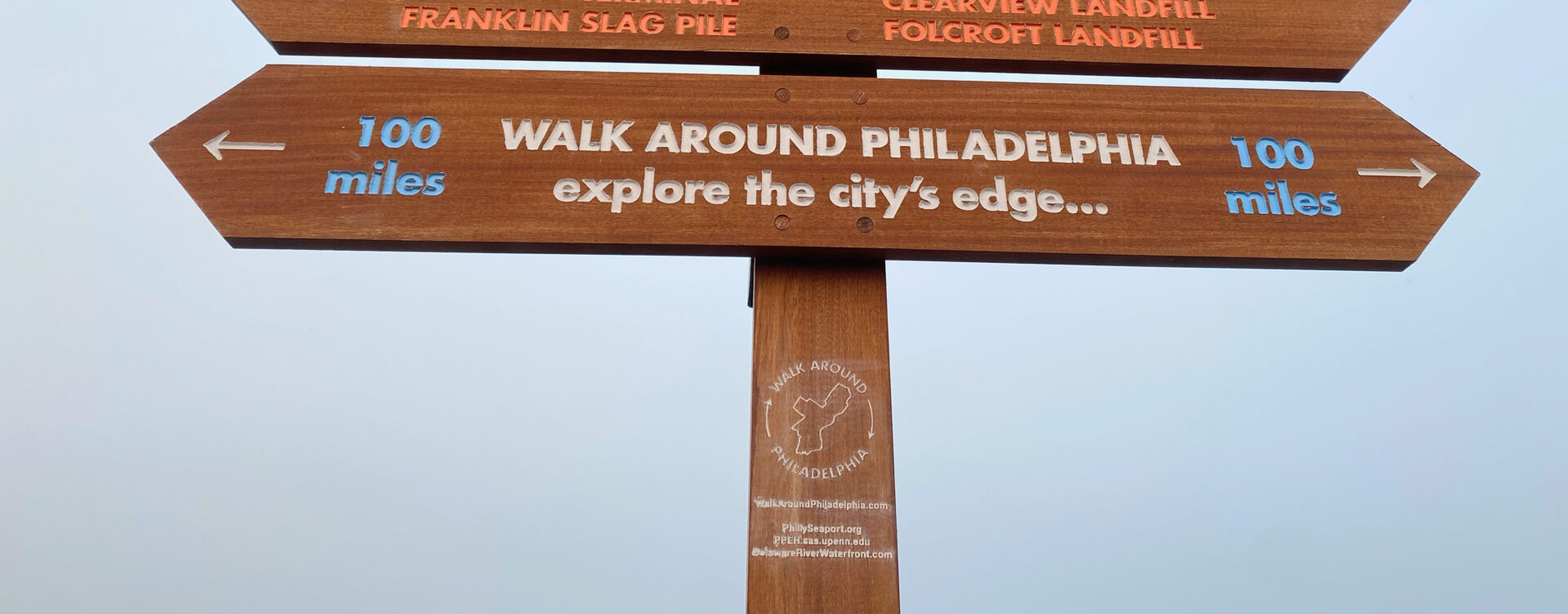
The walk as a project and budding organization will no doubt continue to evolve much like the perimeter walk itself: with twists and turns, unexpected setbacks and opportunities. I’m grateful to be sharing this path with you.
Thank you.
If you’ve made it this far, thank you. I know that this is a big vision — one that we can only build together. There’s another donation button below for anyone able to support the Walk’s most immediate financial needs, but money is only one way this community grows.
You can also help by sharing this vision with people who should hear it. You can introduce the Walk to prospective funders, or encourage your favorite journalists to follow and cover the project as it evolves. You can tell your employer or the educators in your world about the Walk and why it matters. You can become a Trail Angel — offering snacks, encouragement, and a warm welcome along the route — or encourage a friend to join you for a segment. You can sign up to volunteer, set out to do it on your own, or simply make sure you’re getting our updates so you know what’s happening next.
However you choose to support this work — through funding, connections, participation, or simply staying in the loop — you’re helping bring this long-term vision to life. Thank you.